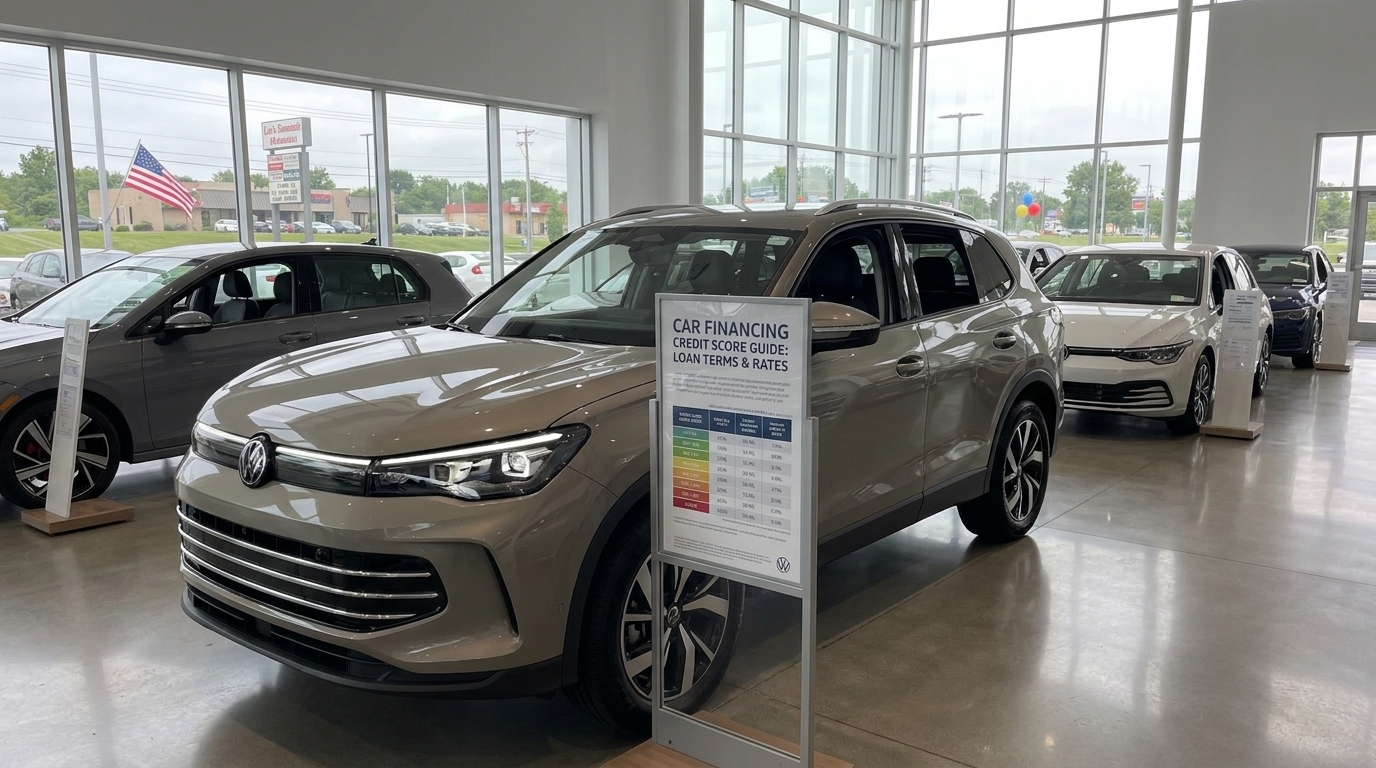
Electric vs Gas SUVs: Complete Cost and Performance Comparison for Lee's Summit Drivers
Compare electric, gas, and hybrid SUVs on cost, performance, and ownership for Lee's Summit drivers. A practical 2026 buyer's guide from Volkswagen Lee's Summit.
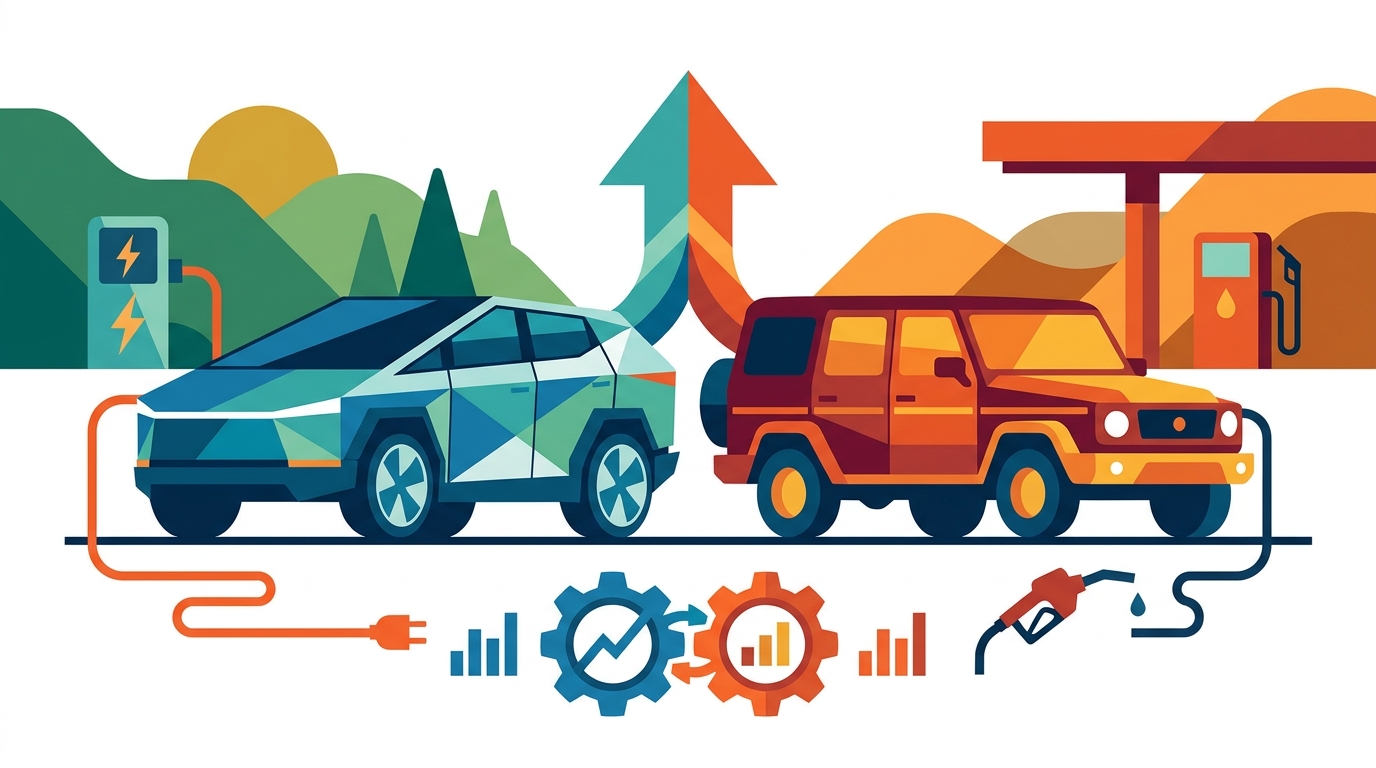
If you're shopping for an SUV in Lee's Summit right now, you're walking into one of the most interesting moments the segment has seen. Electric SUVs have matured, gas models keep getting more efficient, and hybrids quietly sit in the middle making a strong case for buyers who aren't ready to commit to either extreme. So how do you actually choose?
This guide breaks down the real cost and performance differences between electric and gas SUVs in 2026 — with hybrid options factored in — so you can make a decision that fits how you drive around Jackson County, not how someone drives in Los Angeles or Manhattan.
The Short Answer: Which Powertrain Wins?
There isn't a universal winner. The right choice depends on your daily mileage, whether you can charge at home, how long you plan to keep the vehicle, and how you weigh upfront cost against long-term savings.
- Electric SUVs tend to win on fuel cost, performance smoothness, and low maintenance — if you have reliable home charging.
- Gas SUVs remain the simplest choice for long highway trips, towing, and buyers who don't want to think about charging infrastructure.
- Hybrid SUVs are the practical middle ground, offering meaningful fuel savings without changing how you refuel or plan road trips.
Let's get into the details.
Upfront Cost: Sticker Price and Incentives
Gas SUVs still generally have a lower sticker price than comparable electric models, though the gap has narrowed considerably in 2026. A mainstream gas compact SUV typically lands several thousand dollars below its electric counterpart at the trim-for-trim level.
Federal and manufacturer incentives can offset part of that difference for qualifying EVs, but eligibility rules — including income caps, battery sourcing requirements, and price thresholds — change frequently. Before you assume a specific tax credit applies to a vehicle you're considering, confirm the current rules with your tax professional and your dealer. We walk customers through what's currently available on each EV in our inventory rather than relying on outdated assumptions.
Hybrid SUVs usually sit between gas and electric on price, often only a modest premium over the equivalent gas trim.
Fuel and Energy Costs in Lee's Summit
This is where electric SUVs make their strongest case. Charging at home overnight is dramatically cheaper per mile than gasoline, especially with Evergy's residential rates in the Kansas City metro. For a household putting 12,000 to 15,000 miles a year on an SUV, the annual energy savings of an EV over a gas SUV can be substantial.
Public DC fast charging is more expensive than home charging — sometimes approaching the per-mile cost of gasoline — so EVs work best for buyers who can plug in at home in neighborhoods like Raintree Lake, Lakewood, or newer developments off Pryor Road where garage charging is straightforward.
Gas SUVs are predictable: you know what the pump costs, and Lee's Summit has no shortage of stations along Highway 50, US-50, and 291. Hybrids cut fuel consumption meaningfully, particularly in the stop-and-go traffic you'll hit around the Summit Fair shopping area or on commutes into downtown Kansas City.
Maintenance and Long-Term Ownership
Electric SUVs have far fewer moving parts. No oil changes, no spark plugs, no exhaust system, no transmission fluid in the traditional sense. Brake pads also last longer thanks to regenerative braking. Over a five- to seven-year ownership window, EV maintenance costs are typically a fraction of what a gas SUV requires.
Gas SUVs are well-understood, and any independent shop in Lee's Summit can service one. Parts are everywhere, and resale value on popular gas models remains strong.
Hybrids are mechanically more complex than either pure powertrain — they have both an engine and an electric drive system — but modern hybrid reliability has been excellent, and the maintenance cadence is similar to a gas vehicle.
Performance: How They Actually Drive
Acceleration and Daily Driving
Electric SUVs deliver instant torque. Even a mainstream EV SUV will feel quicker off the line than a comparably priced gas model, and the quiet cabin makes everyday driving noticeably more relaxed. For commuters running between Lee's Summit and Overland Park, that smoothness adds up.
Gas SUVs have improved dramatically in refinement, and turbocharged four-cylinders now do work that used to require a V6. They're responsive, familiar, and easy to live with.
Range and Road Trips
This is where gas still has the edge. A full tank in a midsize gas SUV will typically take you from Lee's Summit to St. Louis and most of the way back without stopping. Modern electric SUVs offer 250 to 320 miles of real-world range, which is plenty for daily driving and weekend trips, but longer hauls require route planning around fast chargers.
Missouri's charging network has grown along I-70 and I-49, but it's still thinner than what you'd find on the coasts. If you regularly drive to the Lake of the Ozarks, rural Missouri, or take frequent long road trips, factor charging stops into your decision.
Towing and Winter Performance
Gas and hybrid SUVs generally handle towing more practically than EVs, since towing significantly reduces electric range. Cold Missouri winters also reduce EV range — typically 15 to 25 percent in deep cold — though preconditioning the battery while plugged in helps recover much of that.
EV SUV Benefits Worth Knowing
- Lower running costs for drivers with home charging
- Quieter, smoother ride with instant torque
- Reduced maintenance schedule — no oil changes, fewer fluids, longer brake life
- Home fueling convenience — you start every morning with a "full tank"
- Access to HOV and incentive programs where applicable
When a Hybrid SUV Makes the Most Sense
Hybrids deserve more attention than they get. If you drive a lot of mixed city and highway miles, can't reliably charge at home, or want better fuel economy without changing your habits, a hybrid SUV is often the smartest financial pick. Plug-in hybrids (PHEVs) take this further, offering 25 to 50 miles of electric-only range for daily errands while keeping a gas engine for road trips.
For Lee's Summit households with one driver who commutes locally and another who travels regionally, a hybrid or PHEV in the driveway often beats committing the whole household to one extreme.
How to Choose: A Practical Framework
- Map your driving. Average daily miles, longest regular trip, and how often you tow.
- Assess charging. Can you install a Level 2 charger at home? Renters and condo dwellers should weigh this carefully.
- Run a five-year cost comparison. Include sticker price, incentives, fuel/energy, maintenance, and projected resale.
- Test drive all three. The differences in feel are larger than spec sheets suggest.
- Work with a dealer who'll explain tradeoffs honestly. Pressure tactics and vague answers are red flags.
That last point matters. Volkswagen Lee's Summit holds a 4.5★ rating across more than 5,000 Google reviews, and the themes that come up repeatedly — transparent dealing, knowledgeable staff, no-pressure process — are exactly what you want when you're weighing a decision this big. One customer wrote that the dealership was "really transparent and straightforward," which is the bar any buyer should set. Another noted that the team "made sure I left with the deal that best suited me" — a sentiment that reflects what good SUV guidance should look like.
Frequently Asked Questions
Are electric SUVs cheaper to own than gas SUVs?
Over a five- to seven-year ownership window, electric SUVs frequently come out ahead on total cost of ownership thanks to lower fuel and maintenance expenses — provided you have home charging. Without home charging, the math gets closer.
How does Missouri winter affect EV range?
Expect a 15 to 25 percent range reduction in deep cold. Preconditioning the battery while still plugged in, and parking in a garage, both help mitigate this.
Is a hybrid SUV a good compromise?
For many Lee's Summit drivers, yes. Hybrids cut fuel costs meaningfully without requiring charging infrastructure, and PHEVs let you do most local driving on electricity while keeping gas-powered range for longer trips.
What should I check before buying an EV SUV?
Confirm home charging feasibility, current incentive eligibility, the vehicle's real-world cold-weather range, warranty coverage on the battery, and the local fast-charging network on routes you actually drive.
How do I know if EV incentives apply to the SUV I'm considering?
Incentive eligibility depends on your household income, how you finance the vehicle, the SUV's price, and where its battery components are sourced — all of which can change. The safest approach is to verify current eligibility directly with your dealer and a tax professional before you sign, not after.
Does it make sense to buy an electric SUV if I live in an apartment or can't charge at home?
It's a genuine challenge. Without reliable home charging, you'll depend on public fast chargers, which cost more per mile and add planning friction. A plug-in hybrid or conventional hybrid typically makes more financial and practical sense for Lee's Summit drivers who can't install a home charger.
The Bottom Line for Lee's Summit Buyers
There's no single right answer in the electric vs gas SUV comparison — there's the right answer for how you drive. EVs reward home-charging households with lower running costs and a smoother daily experience. Gas SUVs remain the simplest, most flexible option. Hybrids quietly do a lot of what both promise, with fewer compromises than either.
If you'd like to compare electric, hybrid, and gas SUVs side by side with someone who'll walk through the actual numbers for your situation, the team at Volkswagen Lee's Summit can help. You can reach us at vwleessummit.com to schedule a test drive or ask questions before you visit.
"