
How to Keep Your Volkswagen Running at Its Best
A practical 2026 maintenance guide for Volkswagen owners in Kansas City — oil intervals, tire rotations, brake service, and long-term reliability tips.
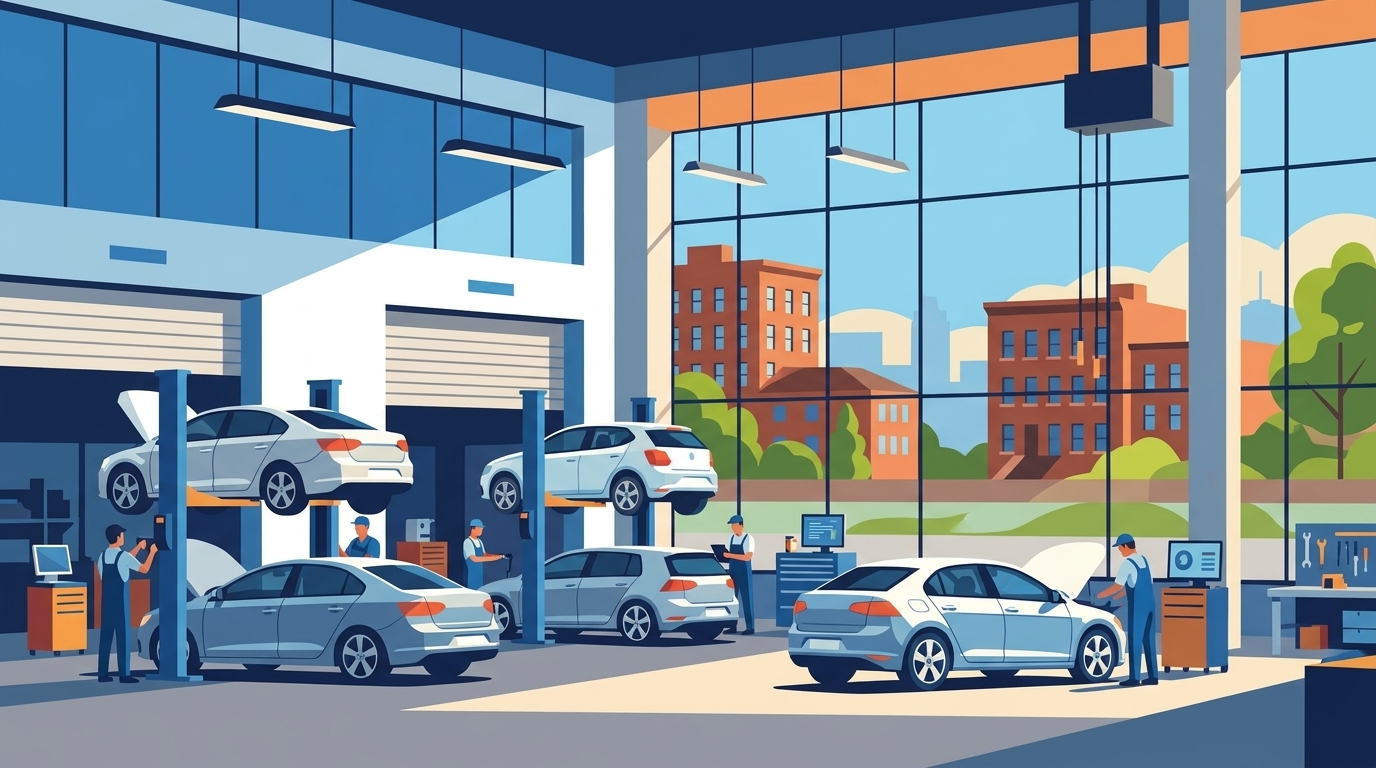
You bought a Volkswagen because it drives better than it has any right to at the price. Keeping it that way — quiet, tight, quick off the line at the Ward Parkway light — comes down to a maintenance rhythm most owners underestimate. Kansas City is harder on cars than the sticker sheet suggests: freeze-thaw cycles from November through March, pothole season every spring on I-435 and 71, brutal August humidity, and the kind of road salt that shows up on your rocker panels by February. Here's how to maintain a Volkswagen for best performance in this specific climate, and what to prioritize year by year.
Follow the Volkswagen Maintenance Schedule (and Actually Read It)
Every modern VW — Jetta, Tiguan, Atlas, Taos, ID.4, Golf GTI — ships with a factory-published maintenance schedule that runs on a two-tier interval system. The 10,000-mile service is the light one: oil, filter, inspection, tire rotation, fluid top-offs. The 20,000-mile service adds cabin filter, brake fluid check, and a deeper look at suspension and driveline components. At 40,000 miles you're into spark plugs on gas engines, and at 60,000–80,000 miles most VWs need a Haldex fluid change (on 4Motion AWD models) and a fresh set of brake pads.
Kansas City drivers should treat these intervals as ceilings, not targets. If you spend your commute in stop-and-go traffic on Grand Boulevard or you're crossing the state line twice a day, you're operating under what VW calls "severe service." Shorten intervals by roughly 20–30% and your engine will thank you at 150,000 miles.
The VW Oil Change Interval: What the Manual Says vs. What Kansas City Demands
Volkswagen's factory recommendation for most current turbocharged gas engines is full-synthetic oil meeting VW 508.00/509.00 or 502.00/504.00 spec, changed every 10,000 miles. That number assumes highway driving, moderate climate, and clean fuel. Kansas City delivers none of those consistently.
For turbocharged VWs — and virtually every VW sold since 2026 is turbocharged — heat is the enemy. Turbochargers spin at over 100,000 RPM and rely on oil for both lubrication and cooling. When August pavement hits 140°F and you're sitting in Chiefs traffic on Blue Ridge Cutoff, that oil breaks down faster than the interval assumes. A practical rule for most owners here:
- Highway commuters: 8,000–10,000 miles between changes
- Mixed city/highway: 7,000–8,000 miles
- Short trips and stop-and-go: 5,000–6,000 miles
Always use oil that meets the exact VW spec printed on your oil cap. Generic "European formula" oils from a quick-lube chain are often not certified to VW 508.00, and using the wrong viscosity is the fastest way to trigger a check engine light or ruin a timing chain tensioner.
VW Tire Rotation and Brake Service
Tire rotation every 10,000 miles is the single cheapest thing you can do to extend the life of a Volkswagen. Front-wheel-drive Jettas and Golfs wear the front tires roughly twice as fast as the rears; 4Motion Tiguans and Atlases wear more evenly but still benefit from front-to-rear rotation. Skip this and you'll be buying a full set at 35,000 miles instead of 55,000.
Brake service is where Kansas City weather earns its reputation. MoDOT and the city crews use a heavy hand with road salt and brine from December through February, and salt eats brake rotors from the inside out. Even if your pads still measure 6mm, corroded rotors will pulse the pedal and shorten the life of the next pad set. Have brakes inspected at every oil change and plan on:
- Front pads: 40,000–60,000 miles
- Rear pads: 50,000–70,000 miles
- Rotors: usually one to two pad cycles, sooner in salt-heavy winters
- Brake fluid flush: every 2 years, non-negotiable on any VW
Brake fluid absorbs moisture, and moist fluid boils under hard braking coming down from the Liberty Memorial hill or off the Broadway Bridge. A $150 flush prevents a $2,000 caliper job.
Seasonal Volkswagen Service Tips for Kansas City
Before Winter (October–November)
Test your battery before the first hard freeze. VW's start-stop system is brutal on batteries, and most factory AGM units last 4–5 years in this climate. Check tire tread — Missouri doesn't require winter tires, but if you're driving through Weston or up to the Northland regularly, all-seasons below 5/32" are a liability on ice. Top off washer fluid with a winter blend rated to -20°F.
Spring (March–April)
Wash the undercarriage thoroughly to strip salt residue. Have suspension components inspected — pothole season on Troost and Prospect claims control arm bushings and strut mounts every year. Rotate tires and check alignment.
Summer (June–August)
Check coolant condition and A/C performance. Volkswagen's G13 coolant is pink, lifetime-rated in theory, but should be tested every few years for pH and freeze point. Cabin air filters clog fast during Missouri's pollen-heavy spring and should be swapped annually.
Volkswagen Long-Term Reliability Tips
The owners who get 200,000+ miles out of their Tiguans and Passats share a few habits worth copying:
- Warm the engine before pushing it. Two minutes of easy driving before you hit the on-ramp at Bruce R. Watkins lets oil pressure stabilize.
- Don't ignore small leaks. A weeping valve cover gasket at 60,000 miles is a $300 repair. Ignored for two years, it becomes an oil-fouled coil pack and misfire codes.
- Use Top Tier fuel. Detergent packages in Top Tier gasoline keep direct-injection intake valves cleaner. QuikTrip, Costco, and Phillips 66 all qualify.
- Service the DSG or automatic on time. DSG transmission fluid and filter service is due every 40,000 miles on most models. This is not optional if you want the transmission to see 150,000.
- Address the check engine light immediately. VWs are honest cars — when they throw a code, they mean it. Modern OBD systems often catch issues weeks before they become expensive.
Frequently Asked Questions
How often should I change the oil in my Volkswagen?
Every 10,000 miles under the factory schedule, but 5,000–8,000 miles is smarter for Kansas City drivers who deal with stop-and-go traffic, summer heat, and winter cold starts. Always use oil meeting the VW spec on your oil filler cap.
Do I need to service my VW at a VW dealer?
No — but dealers have VW-specific diagnostic equipment (ODIS), factory-trained technicians, and access to service bulletins independent shops may not see. For anything under warranty, powertrain-related, or involving software updates, a certified VW service center is the safer choice.
How long do Volkswagen brakes last in Kansas City?
Front pads typically last 40,000–60,000 miles. Rotors often need replacement sooner here than in dry climates because road salt accelerates corrosion. Have brakes inspected at every oil change.
What's the biggest maintenance mistake VW owners make?
Skipping the transmission service. DSG and Tiptronic fluid changes are on a mileage schedule for a reason — waiting until the transmission acts up almost always means expensive repair rather than routine service.
Where to Go From Here
Volkswagens reward owners who stay ahead of the maintenance schedule and punish those who don't. The good news: the schedule isn't complicated, and the local climate variables are predictable if you plan around them.
Owners in Kansas City who want factory-spec service, VW-certified technicians, and a service department that knows these cars inside out can reach Volkswagen Lee's Summit at vwleessummit.com to schedule maintenance or get a specific question answered. The dealership's 4.5-star rating across more than 5,000 Google reviews reflects a service and sales culture customers describe as transparent and straightforward — one recent reviewer noted the experience was "clean, smooth, and easy," which is roughly what you want from the shop keeping your car on the road for the next decade.