
How Trade-In Appraisals Work in Lee's Summit, MO
See how dealers set trade-in numbers in Lee's Summit — walkaround, history report, auction data, reconditioning math, and Missouri's trade-in tax credit.
A trade-in appraisal in Lee's Summit, MO is a dealer's working estimate of what your vehicle is worth given its condition, mileage, history, and the route the dealer plans to resell it through. The number is built by starting with wholesale-auction and comparable-sale data, then subtracting the dealer's expected reconditioning and resale costs — not by taking a flat percentage of retail. In Missouri, the trade-in amount generally reduces the taxable purchase price of your next vehicle before sales tax is calculated, which quietly adds real value to the offer on paper.
What exactly happens during a trade-in appraisal in Lee's Summit?
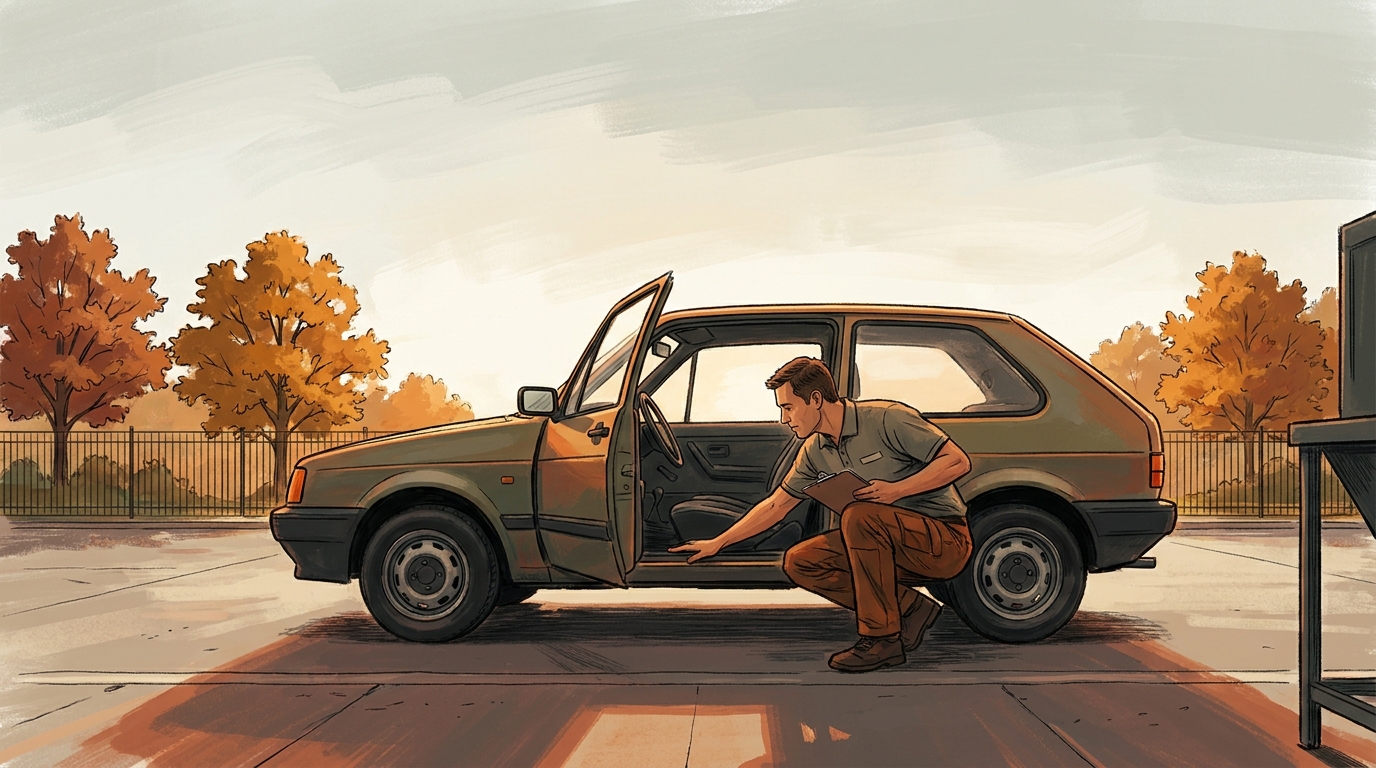
The appraiser performs a structured walkaround — bodywork, tires, lights, and overall appearance — noting dents, scratches, and rust that lower value, then moves to the interior and mechanicals. A history report is pulled through Carfax or AutoCheck, and the vehicle is checked for engine, brake, transmission, and suspension issues. Those findings feed a wholesale or resale value, from which reconditioning costs are subtracted.
At Volkswagen Lee's Summit, that same framework applies whether you're trading a 2026 commuter sedan from a Lake Lotawana driveway or a lightly used SUV from a household in the Summit Fair area. The appraiser is answering one question: what can this vehicle realistically sell for after we prep it, and what will the prep cost?
How do dealers actually calculate the trade-in number?
The core calculation is: estimated resale or wholesale value, minus expected preparation and resale costs, adjusted for market risk and the intended resale route, equals the proposed trade-in allowance. Dealers anchor the resale figure to recent wholesale-auction results and comparable retail listings, then back out tires, detailing, mechanical reconditioning, and reconditioning labor before arriving at a number.
The planned resale route matters. A dealer may retail the trade on its own lot, send it to wholesale auction, or move it to another dealer — and the likely route affects the offer. A clean, low-mileage Volkswagen that fits the dealer's own used inventory typically commands a stronger number than an older off-brand vehicle headed to auction, because the retail path captures more margin than the wholesale path.
What specifically raises or lowers the appraised number?
Condition, mileage, history, and equipment are the four levers. Higher mileage lowers trade-in value because it signals more wear; relatively low mileage for the vehicle's age raises it. A documented accident history can reduce the appraised value even when the repairs were done perfectly, because the vehicle's resale ceiling drops with a reported incident on the record.
On the plus side, documented maintenance records can lift an offer — particularly on higher-end vehicles — and technology packages, premium interiors, and driver-assist features add value. On the minus side, stained seats, torn upholstery, cracks in the dashboard, chipped paint, and unresolved mechanical issues all pull the number down. Interior cleanliness, exterior paint, and mechanical condition each independently affect the offer.
| Factor | Effect on trade-in value | Why it moves the number |
|---|---|---|
| Mileage above segment average | Lowers | Signals more wear and shortens remaining useful life |
| Documented service history | Raises | Reduces the dealer's perceived mechanical risk |
| Reported accident on history report | Lowers | Caps the resale ceiling regardless of repair quality |
| Clean interior and paint | Raises | Cuts reconditioning cost before resale |
| Factory tech / driver-assist packages | Raises | Broadens the retail buyer pool |
| Needed tires, brakes, or mechanical work | Lowers | Reconditioning cost is subtracted from the offer |
How does Missouri's sales-tax treatment change the real value of a trade-in?
In Missouri, a qualifying trade-in generally reduces the taxable purchase price of your next vehicle before sales tax is applied. A $30,000 purchase with a $10,000 trade-in is generally taxed on $20,000. Missouri's state sales-tax rate for motor vehicles is 4.225%, and local taxes may also apply — so the trade's effective value is the dealer's allowance plus the sales tax you don't pay on that amount.
That mechanic matters when you compare a dealer trade-in offer against a private-party sale. A private sale may fetch a higher gross price, but it doesn't come with a tax offset on your next purchase. Precise treatment depends on the specific transaction, so ask the dealer to show the trade allowance, purchase price, and taxable amount as separate line items on the buyer's order.
How can Lee's Summit sellers maximize the trade-in offer?
Bring the vehicle in clean, with service records organized and any obvious cosmetic issues addressed where the fix costs less than the value it restores. Pull your own history report before the appointment so you aren't surprised by what the appraiser finds. Time the trade to when you're actually ready to buy — the strongest offers come when the dealer can anchor the trade to a specific new-vehicle deal, because the Missouri tax offset only applies on a paired transaction.
Shoppers cross-shopping their trade against a new Volkswagen can line up the math quickly. the 2026 Volkswagen Jetta, starting at $23,995 (as of October 2026) is the entry point in the lineup, the 2026 Volkswagen Taos, starting at $26,500 (as of October 2026) opens the SUV side, and the 2026 Volkswagen Tiguan, starting at $30,805 (as of October 2026) sits in the family-SUV slot. Higher up the range, the 2026 Volkswagen Atlas, starting at $39,310 (as of October 2026) and the 2026 Volkswagen ID.4, starting at $45,095 (as of October 2026) widen the trade-in math because the tax offset applies to a larger purchase base.
Why work with Volkswagen Lee's Summit on your trade?
Every new car purchase includes a full tank of gas and roadside assistance.
"Go see Glen at Volkswagen in Lee's Summit!!!!! It was a great buying experience!" — 5★ · Mary, Oct 2026
The sales department is open Monday through Saturday 9:00 AM to 9:00 PM and closed on Sundays, so most Lee's Summit shoppers can bring a trade in on a weeknight after work or on a Saturday without taking time off.
Frequently asked questions
How long does a trade-in appraisal usually take in Lee's Summit?
Most trade-in appraisals take only a short time once an appraiser is available. That covers the visual walkaround, interior inspection, a check of critical mechanical systems, a history-report pull through Carfax or AutoCheck, and comparison to recent wholesale and retail data. Busier Saturday afternoons can run longer, so a weekday appointment typically moves faster.
Does Missouri give a sales-tax credit for a trade-in?
Yes. In Missouri, when a qualifying trade-in is applied to a vehicle purchase, the trade-in amount generally reduces the taxable purchase price before sales tax is calculated — so you may owe sales tax only on the difference between the vehicle price and your trade-in value. The state rate is 4.225% and local taxes may also apply. Ask the dealer to break out the allowance, purchase price, and taxable amount.
Will an accident on my Carfax lower the trade-in value?
Usually, yes. A reported accident on the vehicle history report can reduce the appraised value even when repairs were done perfectly, because it caps the price the dealer can realistically ask when reselling. The size of the reduction depends on the severity of the incident, which panels were affected, and whether structural components were involved.
Should I fix dents and dings before trading in?
Only when the repair costs less than the value it restores. Small paintless-dent repairs, a professional detail, and replacing a cracked windshield often return more than they cost. Major body or mechanical work rarely does, because the dealer can recondition at wholesale rates you cannot access. Clean the vehicle thoroughly and gather service records — those two steps have the best return.
Do service records really raise the offer?
They can. Documented maintenance records can increase a trade-in offer, particularly on higher-end vehicles, because they reduce the dealer's perceived mechanical risk. A folder of oil-change receipts, tire rotations, timing-belt service, and any major repairs tells the appraiser the vehicle is less likely to need expensive reconditioning before resale.
Can I trade in a vehicle I still owe money on?
Yes. The dealer will pay off your existing loan directly with the lender. If the trade-in allowance is higher than the payoff, the difference is applied to your next purchase; if it's lower, the shortfall (negative equity) is typically rolled into the new financing. Bring your current lender's name, account number, and a recent payoff quote to speed things up.
Getting your trade appraised
A trade-in offer is a built number, not a guessed one — condition, mileage, history, equipment, resale route, and reconditioning cost each move it in a predictable direction, and Missouri's trade-in tax treatment adds real value on top of the allowance itself. Readers in Lee's Summit, MO who want a trade appraised against a specific new or used Volkswagen can reach Volkswagen Lee's Summit at (816) 841-7252 or https://www.vwleessummit.com to get the walkthrough started.