Kansas Trade-In Tax Credit in Overland Park, KS (2026)
How Kansas calculates sales tax on a car trade-in for Overland Park buyers, with the math, negative-equity rules, lease edge cases, and the 120-day rule.
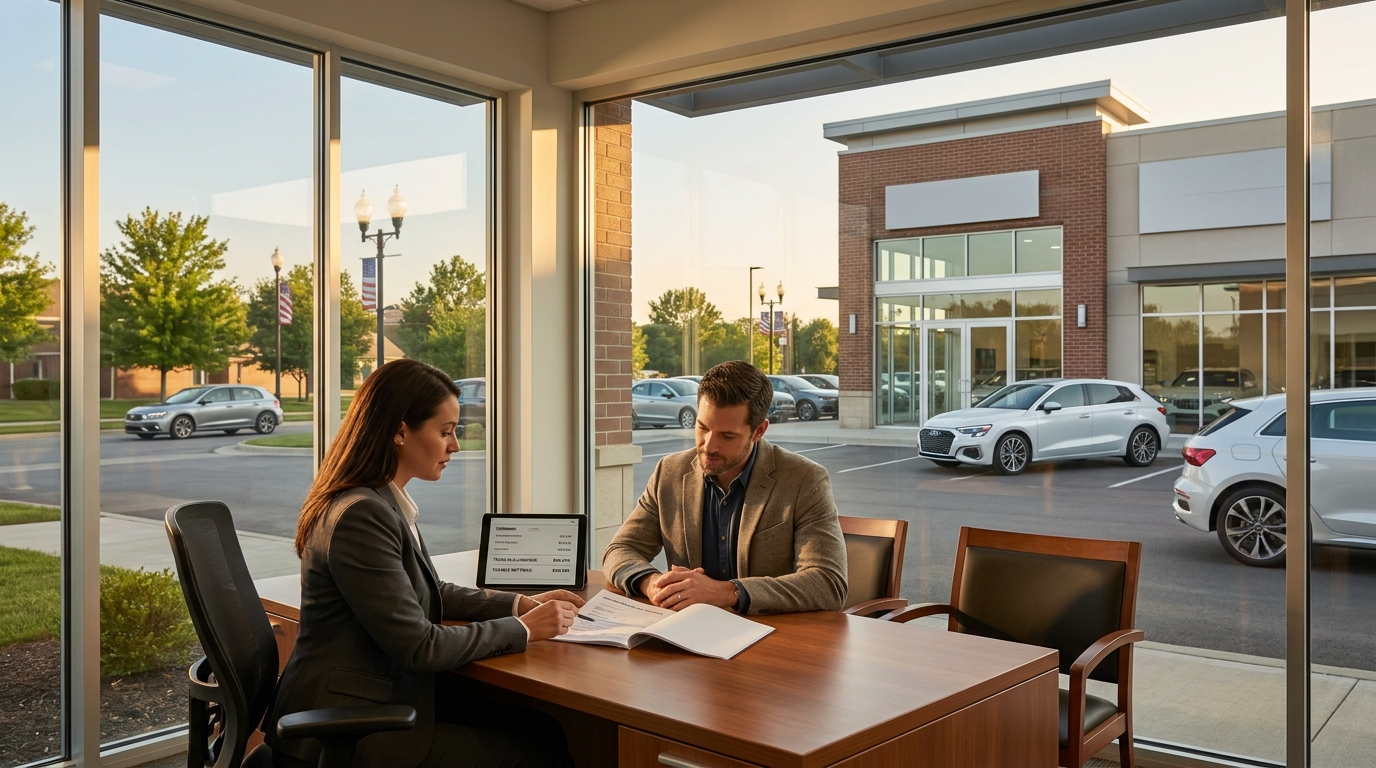
In Kansas, sales tax on a dealer vehicle purchase is calculated on the net price — the negotiated purchase price minus the dealer's trade-in allowance — under K.S.A. 79-3603(o). For an Overland Park buyer, that means if you buy a $40,000 vehicle and the dealer gives you $15,000 for your trade, tax is applied to the $25,000 difference, plus applicable Johnson County and city local rates on that same net amount.
The mechanic is simple, but the edge cases (negative equity, lease trades, private sell-then-buy, partial trades) are where Overland Park buyers most often miscalculate their out-of-pocket cost. This guide walks the calculation, then the exceptions.
How is Kansas sales tax calculated on a car trade-in?
Kansas applies retailers' sales tax to the net selling price: purchase price minus the licensed dealer's trade-in allowance. The state rate plus the applicable Overland Park local rate is applied to that reduced figure, not the sticker. The trade and the purchase must be documented as one transaction, and the trade must enter the dealer's resale inventory for the deduction to apply under K.S.A. 79-3603(o).
Work it in this order every time:
- Start with the negotiated purchase price of the new (or new-to-you) vehicle.
- Subtract the dealer's written trade-in allowance.
- Apply the combined state and local Kansas sales tax rate to that net figure.
The Kansas Department of Revenue administers this rule, and Johnson County treasurers collect the tax at registration by reviewing the dealer's invoice. That's why the paperwork matters as much as the number — a trade that isn't on the buyer's order as a single transaction can be disallowed. Buyers who cross the state line to shop, including those visiting Volkswagen Lee's Summit in the Kansas City metro, should keep the same discipline: the tax applied at your Johnson County registration follows Kansas rules based on where the vehicle will be titled.
How does negative equity affect the taxable base?
Negative equity does not increase your Kansas sales tax. If your loan payoff is higher than what the dealer allows for your trade, the shortfall gets rolled into your financing, but the taxable amount is still purchase price minus the dealer's trade-in allowance — nothing more.
A worked example for an Overland Park buyer:
| Line item | Amount |
|---|---|
| New vehicle purchase price | $38,000 |
| Dealer trade-in allowance | $18,000 |
| Payoff on your old loan | $22,000 |
| Negative equity rolled into new loan | $4,000 |
| Taxable base (Kansas) | $20,000 |
The $4,000 in negative equity is a financing matter — it lifts the loan balance but not the tax. The taxable base stays at the $20,000 difference between the purchase price and the dealer's trade allowance. Two buyers with identical purchase prices and identical trade allowances pay the same Kansas sales tax, regardless of what either owes on their old vehicles.
Can you use a leased vehicle as a trade-in?
Generally no — a leased or rented vehicle does not qualify for the Kansas trade-in deduction, because the lessee doesn't hold title and the vehicle can't enter the dealer's resale inventory as a lessee's trade. The workaround is to exercise the lease buyout, take title in your name, and then trade the titled vehicle at the dealer in a single documented transaction.
Two practical notes for Overland Park lessees:
- If the traded vehicle is titled to someone other than the purchaser on the new deal, the county treasurer can deny the deduction based on title records. Spouses buying jointly, family members swapping trades, and business-titled vehicles all get scrutinized here.
- Once you buy out a lease, take title, and then trade at a dealer, you can qualify — but the buyout and the trade must not be structured to disguise a lessee trade. The dealer's paperwork should reflect that you owned the vehicle at the time of trade.
What is the 2026 sell-then-buy 120-day rule?
Key conditions Overland Park sellers should know:
- The deduction is limited to individuals. Vehicles titled to an LLC or corporation don't qualify under this specific provision.
- If the purchased vehicle costs the same as or less than the sale proceeds, no sales or compensating use tax is owed on the purchase.
- If you already paid tax at full price without claiming the deduction, you can apply to KDOR for a refund.
- Without a compliant TR-312 (or equivalent documentation linking the specific purchase to the related sale), the Johnson County treasurer will compute tax on the full purchase price.
This is separate from the dealer trade-in mechanism. A private sell-then-buy is not a K.S.A. 79-3603(o) trade — it only receives tax relief under the 120-day statute if every condition is met.
How does this play out for Overland Park buyers in 2026?
Overland Park sits in Johnson County, and the total sales tax rate on a vehicle registered there combines the Kansas state rate with Johnson County and city of Overland Park local rates. Confirm the current combined rate for your specific address with the county treasurer — rates vary across Johnson County (Leawood, Lenexa, Shawnee, and Olathe all differ), and Kansas applies the local rate on the same net base as the state rate.
A few Overland Park–specific considerations:
- Many metro buyers cross the state line to shop, but tax follows the Kansas title. A Kansas-titled vehicle pays Kansas tax on the net-of-trade amount at the Johnson County treasurer, regardless of which state the dealership sits in.
- Manufacturer rebates and the taxable base are an area where Kansas guidance is not fully aligned across secondary sources. Ask your dealer to show you exactly how any rebate is applied on the buyer's order, and verify current KDOR guidance if a large rebate is in play.
- Dealers who take vehicles from across the metro — including Volkswagen Lee's Summit, which draws heavily from Johnson County — routinely structure Kansas-titled deals so the trade allowance and purchase price appear as a single transaction on the buyer's order. That documentation is what protects your deduction at registration.
Frequently asked questions
Does Kansas tax the full purchase price or the trade difference?
Kansas taxes the trade difference on qualifying dealer transactions. Under K.S.A. 79-3603(o), retailers' sales tax is applied to the purchase price minus the licensed dealer's trade-in allowance, provided the trade enters the dealer's resale inventory and the trade and purchase are documented as one transaction. Both the state rate and the applicable Overland Park local rate apply to that reduced net amount.
If I owe more on my trade than it's worth, do I pay more tax?
No. Negative equity is a financing issue, not a tax issue. The Kansas taxable base stays at the purchase price minus the dealer's trade-in allowance, regardless of how much you still owe on the old loan. The shortfall is rolled into your new loan balance but does not raise the sales tax you pay to the Johnson County treasurer at registration.
Can I trade in a leased VW and get the Kansas tax credit?
Generally no, because the leasing company holds title and a leased vehicle can't enter the dealer's resale inventory as a lessee's trade. The workaround is to complete the lease buyout, take title in your name, and then trade the now-owned vehicle at a dealer in a single documented transaction. Once you're the titled owner, the K.S.A. 79-3603(o) deduction can apply on the new purchase.
What is the 120-day rule for private sales in Kansas?
You must submit compliant TR-312 bills of sale (or equivalent documentation) to the county treasurer or KDOR linking the sale to the purchase. If the new vehicle costs the same or less than the sale proceeds, no tax is owed.
Does the trade-in credit apply if my spouse's name is on the trade title?
It may not. County treasurers rely on title records to verify eligibility under K.S.A. 79-3603(o), and if the trade is titled to someone other than the purchaser on the new deal, the deduction can be denied. Overland Park buyers in this situation should either retitle the trade before the transaction or have both spouses named as purchasers on the buyer's order, and confirm the approach with the dealer and county treasurer beforehand.
What paperwork do I need to prove the trade-in at registration?
Bring the dealer's buyer's order showing the purchase price and the trade-in allowance as a single transaction, your title assignment and odometer disclosure, and any lien payoff documentation. The Johnson County treasurer reviews the dealer invoice to confirm the net taxable amount. For a private-sale 120-day claim, bring KDOR form TR-312 bills of sale for both the sale and the purchase — without them, tax will be computed on the full purchase price.
Getting the numbers right on your Overland Park purchase
The Kansas trade-in mechanism is genuinely favorable to buyers — but only if the paperwork reflects a single transaction with a licensed dealer, the trade actually enters resale inventory, and edge cases (leased vehicles, split titles, private sell-then-buy) are handled with the right forms. The math itself is straightforward; the mistakes happen in documentation.
Overland Park readers who want a Kansas-titled deal structured cleanly, with the trade allowance and purchase price presented the way the Johnson County treasurer expects to see them, can reach Volkswagen Lee's Summit at https://www.vwleessummit.com or (816) 841-7252 to walk through the numbers before signing. For anything unusual — large negative equity, a business-titled trade, a lease buyout timed with a trade, or a 120-day private-sale claim — verify the specifics with the Johnson County treasurer's office and current KDOR guidance, since local rates and form requirements can change.