How Auto Loan Interest Rates Are Calculated and How to Get the Best Rate
Understand how auto loan interest rates are calculated, what factors influence your APR, and practical ways to secure a lower car loan rate in Lee's Summit.
If you're shopping for a vehicle in Lee's Summit and trying to figure out why one buyer gets 5.9% APR while another gets 9.4% on what looks like the same loan, you're asking the right question. Auto loan interest rate calculation isn't random — it's a formula built from your credit profile, the loan structure, the lender's cost of capital, and the vehicle itself. Understanding how those pieces fit together is the difference between accepting whatever rate gets quoted and negotiating from a position of knowledge.
Here's how car financing rates actually get built, and what you can do to land on the favorable side of the math.
What Goes Into Auto Loan Interest Rate Calculation
An auto loan APR (Annual Percentage Rate) is the yearly cost of borrowing, expressed as a percentage. It includes the base interest rate plus certain finance charges, which is why APR is a more honest comparison number than the raw interest rate alone.
Lenders calculate your APR using several inputs, weighted differently depending on the institution:
- Credit score and credit history — typically the single biggest factor
- Loan term — longer terms usually carry higher rates
- Loan-to-value (LTV) ratio — how much you borrow versus the vehicle's value
- New vs. used vehicle — used cars almost always finance at higher rates
- Down payment — more cash down means less risk for the lender
- Debt-to-income ratio — your monthly debt load relative to income
- The lender's current cost of funds — tied to broader interest rate conditions in 2026
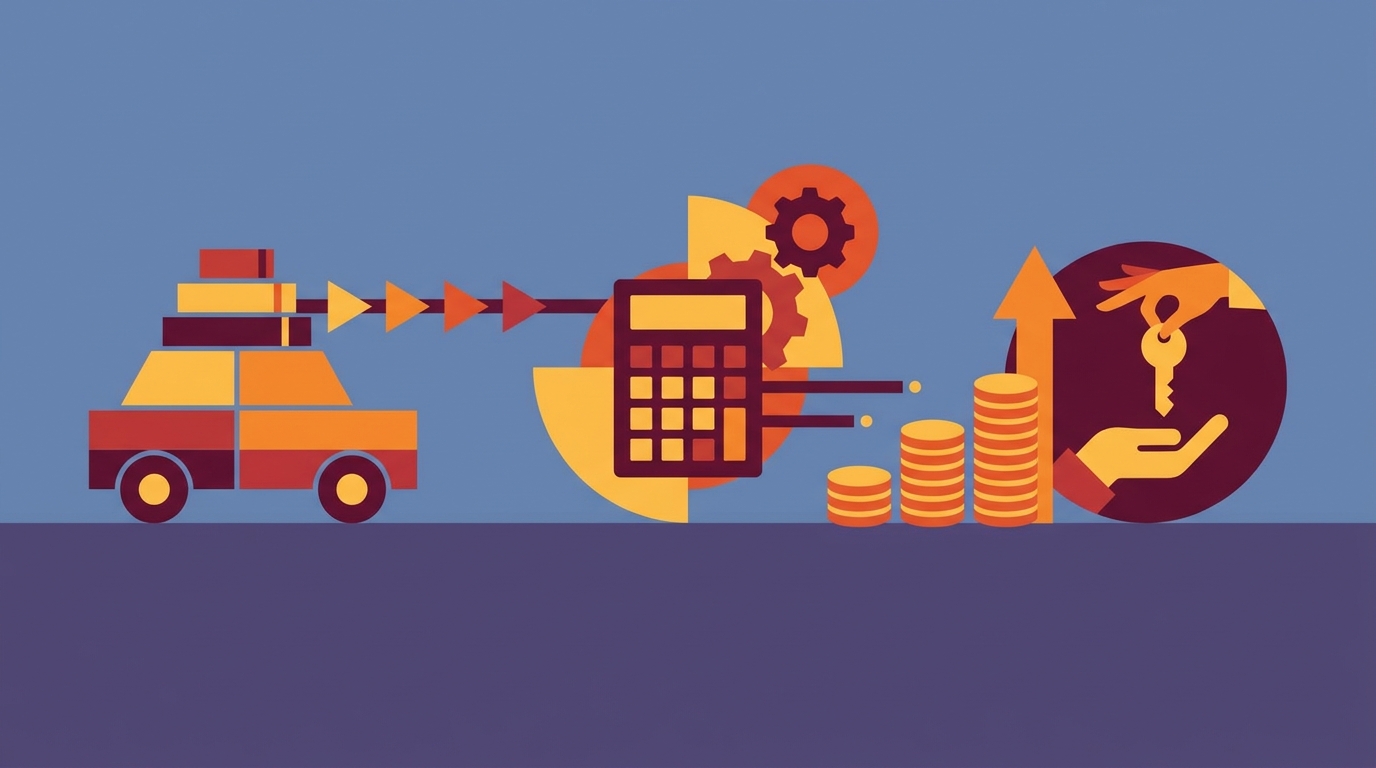
Once those inputs are scored, the lender adds a margin and quotes you an APR. The actual monthly payment is then calculated using an amortization formula that spreads principal and interest across the loan term — early payments are mostly interest, later payments mostly principal.
How Your Credit Score Shapes Your Rate
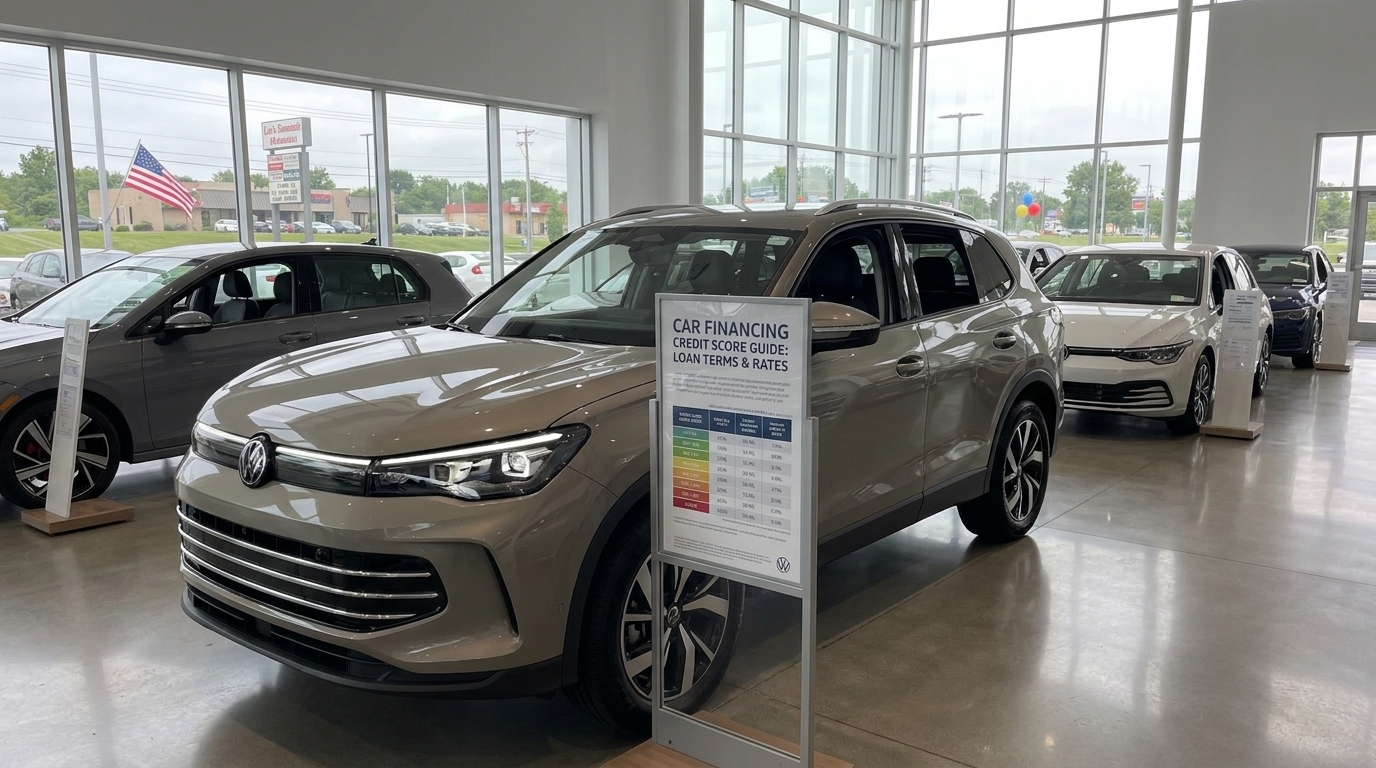
Credit tier is the dominant variable in auto loan APR explained simply. Lenders group applicants into tiers — often labeled Super Prime, Prime, Near Prime, Subprime, and Deep Subprime — and assign rate ranges to each.
A buyer with a 780 score and a buyer with a 620 score, financing the same vehicle on the same term, can see APR differences of 6 to 10 percentage points. Over a 60-month loan on a $32,000 vehicle, that gap can mean paying $8,000 or more in additional interest.
Before you apply, pull your credit reports from all three bureaus. Look for errors — incorrect late payments, accounts that aren't yours, balances reported higher than reality. Disputing and clearing those can move your score meaningfully within 30 to 60 days.
Why Loan Term Affects Your APR
A 36-month loan almost always carries a lower rate than a 72- or 84-month loan. Lenders price longer terms higher because more time means more risk: the vehicle depreciates, your financial situation can change, and the loan can go underwater (you owe more than the car is worth).
The trap on long terms isn't just the higher rate — it's the total interest paid. Stretching a loan from 60 to 84 months to lower the monthly payment can double the lifetime interest cost even if the APR only rises a point or two. When we walk Lee's Summit buyers through financing options, we usually show side-by-side total-cost comparisons so the math is visible, not hidden in the monthly number.
New vs. Used Vehicle Financing
Used vehicles typically finance at higher rates than new ones for two reasons: they depreciate faster relative to the loan balance, and their resale values are less predictable. Manufacturer-backed financing on new Volkswagen models often includes promotional APRs that aren't available on used inventory, though qualification depends on credit tier.
Certified Pre-Owned (CPO) vehicles sit in a middle category — they often qualify for better rates than standard used cars because of the warranty and inspection backing. If you're shopping used in the Lee's Summit area, ask specifically whether a vehicle is CPO-eligible and what rate tier that unlocks.
Missouri-Specific Considerations for Lee's Summit Buyers
A few details matter for buyers financing in Jackson County and the broader Lee's Summit market:
- Sales tax timing. Missouri doesn't collect vehicle sales tax at the dealership the way many states do. You pay it when you title and register at a Missouri license office, typically within 30 days of purchase. Buyers sometimes forget to budget for this and end up financing less than they should have to cover the tax bill.
- Trade-in tax credit. Missouri does allow a sales tax credit on the trade-in value when you trade and buy in the same transaction. That can shift the math on whether to trade in or sell privately.
- Personal property tax. Jackson County assesses annual personal property tax on vehicles, which doesn't affect your APR but does affect your true cost of ownership and should factor into how much car you finance.
- Climate-driven wear. Missouri winters bring road salt and freeze-thaw cycles that affect long-term vehicle condition. Lenders building residual-value assumptions into lease and balloon-loan products factor regional wear patterns in.
How to Get a Lower Car Loan Rate
If you want to know how to get a lower car loan rate, the levers are mostly within your control if you start working on them before you shop:
- Improve your credit before applying. Pay down revolving balances to under 30% of limits, don't open new credit lines in the 90 days before financing, and clear any reporting errors.
- Get pre-approved from multiple lenders. Apply with your bank, a credit union, and the dealership's lending network within a 14-day window — credit scoring models treat multiple auto inquiries in that window as a single inquiry. The pre-approvals give you real numbers to compare.
- Make a meaningful down payment. 10% on used and 20% on new is a useful target. More down means lower LTV, which means lower risk pricing.
- Choose the shortest term you can comfortably afford. If a 60-month payment fits your budget, take it over the 72-month version even if the monthly savings on the longer term look tempting.
- Negotiate the vehicle price separately from the financing. Settle the out-the-door price first. Then talk APR. Bundling the two lets margin hide in places it shouldn't.
- Ask about manufacturer incentives. Volkswagen often runs promotional APRs on specific models and trim levels. These can beat outside bank offers, but they sometimes require choosing the incentive instead of cash rebates — run both scenarios.
- Bring a co-signer if your credit is thin. A creditworthy co-signer can move you up a tier or two, though they take on real legal liability.
Frequently Asked Questions
What's the difference between interest rate and APR on a car loan?
The interest rate is the cost of borrowing the principal. The APR includes the interest rate plus certain required finance charges, expressed annually. APR is the better number for comparing offers because it captures more of the true cost.
Does getting pre-approved hurt my credit score?
Each pre-approval triggers a hard inquiry, which can drop your score a few points temporarily. However, FICO and VantageScore models group multiple auto loan inquiries within a 14-day shopping window as a single event, so rate shopping is essentially free if you do it efficiently.
Can I refinance my auto loan later if rates drop?
Yes. Auto refinancing is straightforward if your credit has improved or market rates have fallen. There's usually no prepayment penalty on standard auto loans, but check your contract.
Is dealership financing always more expensive than a bank?
Not necessarily. Dealerships work with networks of lenders and can sometimes beat bank or credit union offers, especially when manufacturer incentives are in play. The honest answer is to compare both — which is exactly why pre-approval shopping matters.
How does my debt-to-income ratio affect my auto loan rate in 2026?
Lenders use your debt-to-income (DTI) ratio — total monthly debt payments divided by gross monthly income — to gauge repayment risk alongside your credit score. A high DTI can push you into a less favorable rate tier or result in a denial even with a solid credit score. Paying down existing installment or revolving debt before applying is one of the most direct ways to improve your DTI and the rate you're quoted.
What happens to my rate if I finance a car with negative equity from a trade-in?
Rolling negative equity — the amount you owe beyond your trade-in's value — into a new loan raises your LTV ratio, which signals higher risk to lenders. That can result in a higher APR or require a larger down payment to offset the shortfall. It can also push the loan balance above the vehicle's value immediately at signing, so understanding the full payoff math before you trade is essential.
Putting It Together
Your auto loan rate is a calculated number, not a fixed one. The credit profile you bring, the structure of the deal, the vehicle you choose, and how you negotiate all push that number up or down. Buyers who understand the inputs consistently land better rates than buyers who focus only on the monthly payment.
Volkswagen Lee's Summit holds a 4.5-star rating across more than 5,100 Google reviews, with customers regularly noting the team's transparency throughout the financing process. One customer wrote that the dealership was "really transparent and straightforward" — something that matters most when you're comparing APR offers side by side. If you're shopping in the Lee's Summit area and want help walking through financing scenarios, comparing manufacturer APR offers against outside pre-approvals, or understanding how a trade-in changes your tax math, the team at Volkswagen Lee's Summit can run the numbers with you. You can reach us at https://www.vwleessummit.com — bring your pre-approval letter if you have one, and we'll show you how the financing options compare side by side.
"