How to Negotiate Car Prices: Strategies That Actually Work
Practical car price negotiation tips from Volkswagen Lee's Summit — how to research, time your purchase, and get the best car deal in the Lee's Summit market.

Walking into a dealership with the goal of negotiating a better car price can feel intimidating, especially if you've heard horror stories about high-pressure tactics or confusing add-ons. The good news: car buying in 2026 is far more transparent than it used to be, and informed buyers consistently come away with deals they feel good about. The key is preparation, patience, and knowing which levers actually move the price.
Below is a practical playbook we've put together for buyers shopping in Lee's Summit and the surrounding Jackson County area — the same approach we encourage at Volkswagen Lee's Summit, where straightforward pricing tends to make negotiations shorter and more productive.
Start With Research, Not a Test Drive
The single biggest mistake buyers make is walking onto a lot before they know what the vehicle should cost. By the time you're behind the wheel, emotion is already working against your wallet.
Before you visit any dealership, spend an hour gathering three numbers for the specific vehicle you want:
- MSRP — the manufacturer's suggested retail price for the trim and options you want
- Invoice price — roughly what the dealer paid (available through Edmunds, KBB, and TrueCar)
- Average transaction price in the Kansas City metro — what people in our region are actually paying right now
That third number matters most. A car that's slow-moving in coastal markets may be in high demand here, where Missouri winters drive year-round interest in AWD crossovers like the Tiguan and Atlas Cross Sport. Knowing the regional reality keeps your offer grounded.
Time Your Purchase Strategically
When you buy can matter as much as how you negotiate. A few timing patterns hold up consistently in the Lee's Summit market:
- End of month and end of quarter. Sales teams often have volume targets, and the last week of March, June, September, and December tends to produce more flexibility.
- Model-year changeover. When new model-year inventory arrives — typically late summer through fall — outgoing model-year vehicles get more aggressive pricing.
- Weekday afternoons. Saturdays are the busiest days on every lot in eastern Jackson County. A Tuesday or Wednesday visit gives you a salesperson's full attention and more time to work through numbers.
- Before the first Missouri freeze. Buyers in our area often delay car shopping until they've slid through one icy commute on I-470. Shopping in October, before that rush, can mean better selection and less competition for AWD inventory.
Negotiate the Out-the-Door Price, Not the Monthly Payment
This is the most important rule in the entire process. If you only remember one thing from this article, remember this: always negotiate the total out-the-door price.
Monthly payment negotiations hide everything. A lower payment can be engineered by stretching the loan term, rolling negative equity from a trade-in into the new loan, or quietly increasing the sale price while shifting numbers around. The out-the-door figure — vehicle price plus Missouri sales tax, title, registration, and any dealer fees — is the only number that tells you what the car actually costs.
Ask for an itemized out-the-door quote in writing. A reputable dealer will provide one without hesitation.
A Note on Missouri Sales Tax
Missouri handles vehicle sales tax differently than many states. You generally pay state and local sales tax when you title the vehicle at the Department of Revenue — not at the dealership — and Missouri does offer a trade-in tax credit, meaning you're typically taxed on the difference between the new vehicle price and your trade-in value. Confirm the current rate for your specific Lee's Summit address, since local sales tax varies across Jackson County.
Separate the Three Negotiations
Every car deal is actually three separate negotiations stacked on top of each other:
- The price of the new vehicle
- The value of your trade-in (if applicable)
- The financing terms (if applicable)
Dealers benefit when these get blended together. You benefit when you keep them separate. Settle the new vehicle's price first, in isolation. Then discuss the trade-in. Then discuss financing — and only after you've already gotten a pre-approval from your own bank or credit union to use as a benchmark.
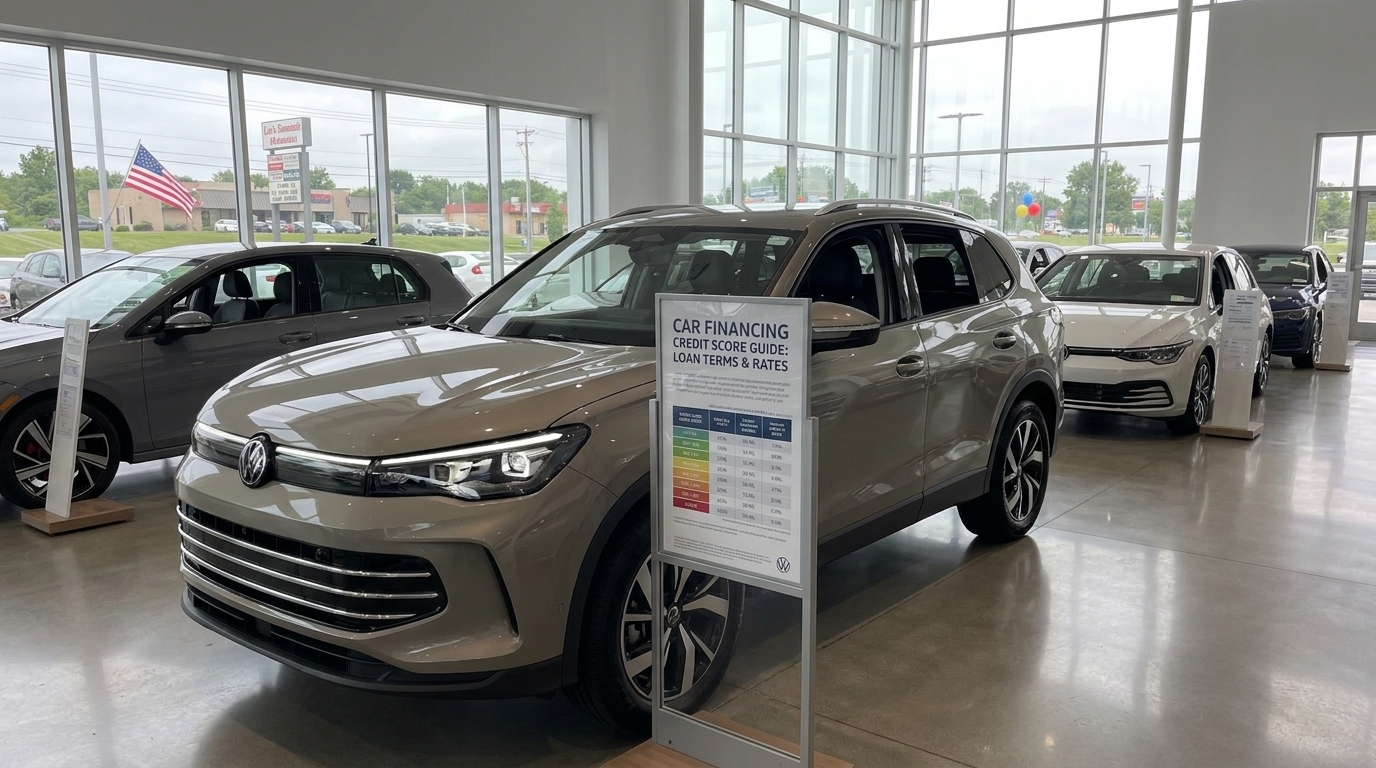
Plenty of credit unions in the Kansas City area offer competitive auto rates, and walking in with a pre-approval gives you real leverage. If the dealer can beat your rate, great. If not, you already have financing lined up.
Know Which Add-Ons Are Worth It
The finance office is where many deals quietly get more expensive. You'll be offered extended warranties, paint protection, fabric protection, GAP insurance, tire-and-wheel coverage, and more. Some have real value; others are pure margin.
A few honest guidelines:
- GAP insurance can make sense if you're financing with a small down payment, but compare the dealer's price to what your auto insurer charges.
- Extended warranties on Volkswagen vehicles should be manufacturer-backed, not third-party. Ask specifically.
- Cosmetic protection packages are almost always cheaper to buy aftermarket if you want them at all.
You can decline any of these without affecting the vehicle price you already negotiated.
Be Willing to Walk — But Be Reasonable
The threat of walking out is the buyer's strongest tool, but it only works if it's genuine. If you've done your research and the dealer can't get within a fair range of regional transaction prices, leaving is a reasonable response. Conversely, if the price is fair and the vehicle matches what you wanted, grinding for another $300 can cost you the car — someone else will buy it that weekend.
The buyers who get the best car deals are the ones who know what fair looks like and recognize it when it's in front of them.
Frequently Asked Questions
Is the sticker price ever the real price?
Rarely on used vehicles, and not always on new ones either. Some dealers price aggressively up front to reduce back-and-forth; others leave room to negotiate. Either way, asking for the out-the-door figure tells you where the real number lives.
Should I tell the dealer I have a trade-in right away?
You can mention it, but don't let it shape the new-vehicle conversation. Get the new car's price firmed up first, then have the trade appraised separately.
How much can I typically negotiate off MSRP in 2026?
It varies dramatically by model, trim, and inventory levels. High-demand vehicles may sell at or near MSRP; slower-moving inventory and outgoing model years often have more room. Regional comparison data is your best guide.
What if I'm not a confident negotiator?
Look for dealerships that publish transparent pricing and don't rely on pressure tactics. Volkswagen Lee's Summit's 4.5★ rating across more than 5,000 Google reviews reflects a customer base that consistently highlights transparent and honest dealing — one recent reviewer described the experience as "really transparent and straightforward," which is the kind of environment that makes negotiation feel less like a battle.
The Bottom Line
Negotiating a car price isn't about being aggressive or clever — it's about being prepared. Know the regional market, separate your negotiations, focus on the out-the-door number, and don't be afraid to ask questions in the finance office. Buyers who do these four things almost always come away with a deal they feel good about.
Shoppers in Lee's Summit who want to see how this approach works in practice can visit Volkswagen Lee's Summit at vwleessummit.com to browse current inventory, request an out-the-door quote, or schedule a test drive. We're happy to walk through the numbers with you, whether you're ready to buy this week or just starting your research.