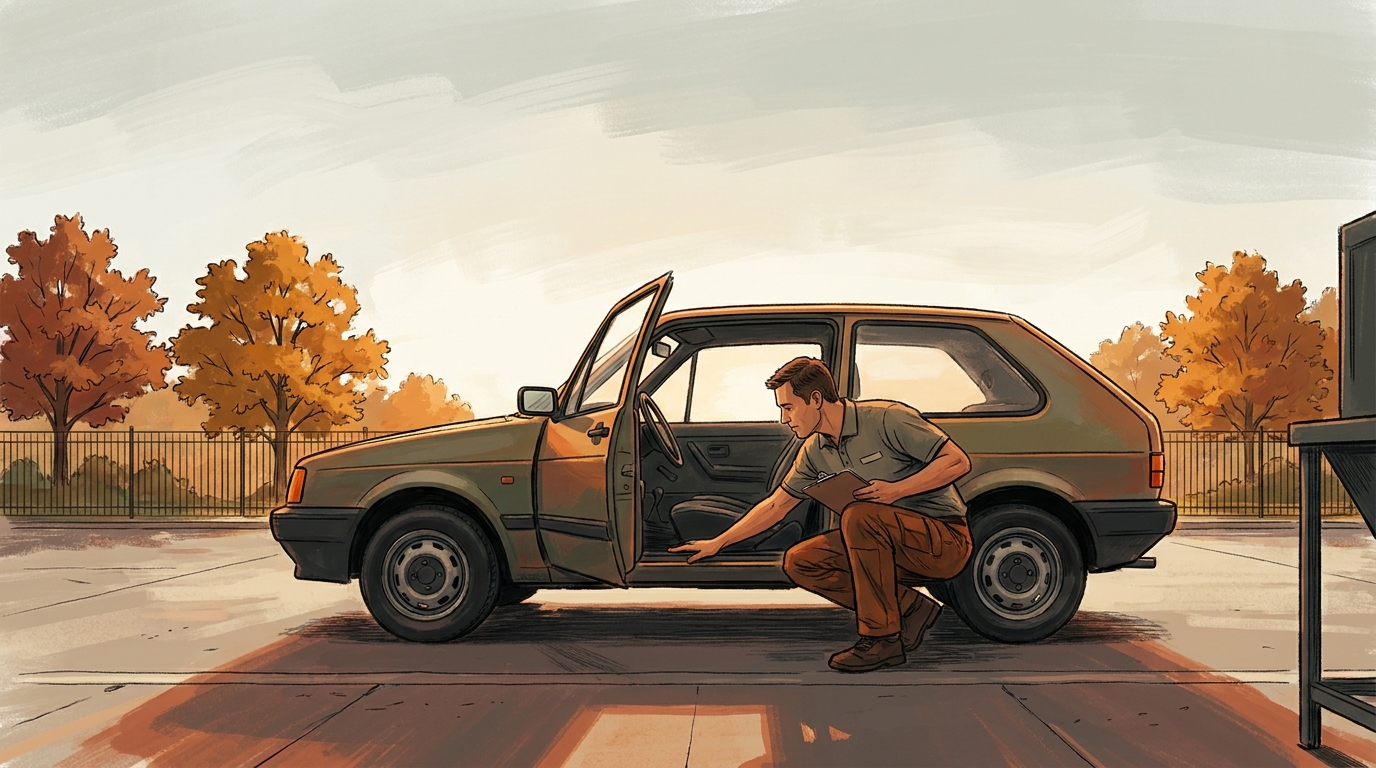
Trade-In Value for My Car in Kansas City, KS
What your car is worth for trade-in at a Kansas City, KS dealership — plus how Kansas sales tax rules can add hundreds to your effective value.

Your car's trade-in value at a Kansas City, KS dealership is typically the wholesale figure a dealer will credit toward your next vehicle — usually 10-20% below private-party retail — but in Kansas that number is worth more than it looks, because the trade-in amount is subtracted from the taxable price of your new vehicle before sales tax is calculated. On a $35,000 purchase with a $15,000 trade, you're taxed on $20,000, not $35,000.
That single rule, codified at K.S.A. 79-3603(o), is what separates a Kansas trade-in from an outright private sale. Below is how the number is actually calculated, how the tax math works, and what to bring to a Kansas City, KS dealership to make the appraisal go quickly.
How much is my car worth for trade-in at a Kansas City, KS dealership?
Most trade-in offers in Kansas City, KS land between wholesale auction value and roughly 85-90% of private-party value. Dealers weigh mileage, condition, service history, local demand, and current auction pricing. On a clean, in-demand vehicle, the tax savings from Kansas's trade-in deduction can effectively add 8-9% back to your offer.
The starting point is a book value — Kelley Blue Book, Edmunds, or NADA — for the trade-in condition tier that honestly matches your vehicle. From there, a Kansas City, KS dealer adjusts for reconditioning cost, current inventory levels, and how quickly they can retail or wholesale the car. A 2026 crossover with 45,000 miles and clean CarFax will appraise differently than the same vehicle with a salvage title or overdue maintenance, even if the book value looks identical.
How does the Kansas trade-in tax credit actually work in 2026?
Under K.S.A. 79-3603(o), Kansas sales tax on a dealer transaction is calculated on the net selling price — the new vehicle's price minus the trade-in value the dealer allows. You pay tax only on the difference, not the sticker. This is a direct reduction in the taxable base, not a rebate, and it applies at the point of sale through the dealer.
Kansas City, KS buyers should factor this into their walk-out math. With combined state and local sales tax in Wyandotte County commonly running around 9-10%, a $15,000 trade credit against a new vehicle purchase can translate into roughly $1,400-$1,500 in avoided sales tax — real money that a private-party sale would not recover. Volkswagen Lee's Summit and other regional dealerships structure the paperwork so the deduction shows on the buyer's order and the county treasurer's registration record.
What about selling privately then buying — does Kansas offer that credit too?
Yes. (before or after the sale) to owe sales or compensating use tax only on the amount by which the purchase price exceeds the private-sale proceeds. If the new vehicle costs the same or less than what you sold for, no sales tax is due on the purchase.
To claim it, you must present the county treasurer with completed bills of sale for both vehicles — on Form TR-312 or an equivalent document that links the two transactions — at the time of registration. If you already paid the tax, you apply to the Kansas Department of Revenue for a refund. Miss the 120-day window and the deduction is gone; the timing is strict.
Dealer trade-in vs. private sale in Kansas: which nets more?
A capsule comparison for Kansas City, KS buyers weighing the two routes:
| Factor | Dealer Trade-In | Private Sale + Purchase |
|---|---|---|
| Gross sale price | Lower (wholesale-adjusted) | Higher (retail-ish) |
| Kansas sales tax treatment | K.S.A. 79-3603(o) — tax on net difference | K.S.A. 79-3603v — tax on excess over sale proceeds, 120-day window |
| Paperwork burden | Handled by dealer | Buyer files Form TR-312 with county treasurer |
| Time to close | Same day | Weeks; buyer must find, screen, and transact |
| Risk | Minimal | Payment fraud, title issues, test-drive liability |
| Best when | Convenience and tax savings matter | Vehicle commands strong private-party premium |
The right answer depends on the spread between wholesale and retail on your specific vehicle. On common, high-demand models the gap is narrow enough that the tax savings and time savings favor a dealer trade. On rare or enthusiast vehicles the private-sale premium can outrun the tax benefit — but only if you can execute the purchase side within the 120-day K.S.A. 79-3603v window and document both transactions properly.
What should Kansas City, KS drivers bring to a trade-in appraisal?
Bring the title (or current loan payoff information), current registration, all keys and fobs, the owner's manual, and service records if you have them. A clean, vacuumed vehicle appraises higher than one that isn't — reconditioning cost comes directly out of the offer. If there's a lien, the dealer will contact your lender for a 10-day payoff.
Volkswagen Lee's Summit, which serves the greater Kansas City metro from just across the state line, has built a reputation for the transparency piece of this process, with consistent feedback about clear, upfront numbers on trade appraisals.
Does the Kansas trade-in deduction have any traps?
A few. The deduction does not apply to leased or rented vehicles where you don't hold a qualifying ownership interest. If the vehicle being traded is titled to someone other than the purchaser, the deduction may not apply outside narrow statutory exceptions. And under K.S.A. 79-3603v, the private-party rule specifically requires the newly purchased vehicle to be of greater value than the one you sold — otherwise no tax is due, but the linking documentation is still required.
Local sales tax rates in Wyandotte County and the City of Kansas City, KS also apply to the net taxable amount on top of the state rate, so the total savings from a trade-in credit is larger than the state rate alone suggests. Verify current combined rates with the county treasurer at registration.
Frequently asked questions
How is trade-in value calculated at a Kansas City, KS dealership?
Dealers start with a book value (Kelley Blue Book, NADA, or Edmunds) for the condition tier that matches your vehicle, then adjust for mileage, reconditioning needs, title status, service history, and current auction and retail demand. The final offer typically falls between wholesale auction value and about 85-90% of private-party retail, depending on how quickly the vehicle will resell.
Does Kansas tax me on the full price of a new car if I trade in?
No. Under K.S.A. 79-3603(o), Kansas sales tax on a dealer transaction is calculated on the net selling price — the new vehicle's price minus the trade-in value the dealer allows — not the full sticker. On a $35,000 purchase with a $15,000 trade, you pay tax on $20,000. Local Wyandotte County sales tax applies to that same net amount.
Can I sell my car privately and still get a Kansas tax break on my next one?
If you sell a used vehicle privately and buy a vehicle of greater value within 120 days before or after that sale, you owe tax only on the difference between the purchase price and your sale proceeds. You must file bills of sale for both vehicles on Form TR-312 with the county treasurer.
What documents do I need for the private-party trade-in deduction?
You need completed bills of sale for both the vehicle you sold and the vehicle you purchased, on Kansas Form TR-312 or an equivalent document that clearly links the two transactions. Present them to the county treasurer at the time of registration. If you already paid the sales tax, you can apply to the Kansas Department of Revenue for a refund with the same documentation.
What if my new car costs less than what I sold my old one for?
Under K.S.A. 79-3603v, if the purchase price of the newly acquired vehicle is equal to or less than the proceeds from your private sale, no sales or compensating use tax is due on the purchase transaction. You still need to document both transactions with the linking bills of sale so the county treasurer can verify the deduction at registration.
How long does the appraisal itself take at a dealership?
A standard trade-in appraisal at a Kansas City-area dealership usually takes 20 to 45 minutes. The used-car manager or appraiser inspects the exterior, interior, tires, and undercarriage, verifies the VIN and title status, runs a vehicle history report, and often takes a short road test. If you have a lien, add time for the dealer to obtain a payoff quote from your lender.
Is a dealer trade-in always the better financial choice in Kansas?
Not always. For common vehicles in strong demand, the Kansas sales-tax savings and convenience often outweigh the higher gross number a private sale might bring. For rare, enthusiast, or highly optioned vehicles where private-party premiums are large, selling privately and then using K.S.A. 79-3603v within 120 days can net more — provided you handle the documentation carefully.
Where to go from here
Kansas's trade-in tax framework rewards buyers who plan the transaction rather than improvising it. Get an honest book-value read on your current vehicle, verify how the K.S.A. 79-3603(o) deduction (or the K.S.A. 79-3603v private-party rule) will apply to your specific situation, and confirm the combined state and local tax rate that will hit the net amount.
Readers in Kansas City, KS who want a written trade appraisal and a clear breakdown of the tax math on a specific new or used vehicle can reach Volkswagen Lee's Summit at https://www.vwleessummit.com to start the conversation. Bring the title, keys, and service records, and ask for the net-of-tax number — that's the figure that actually matters.