Truck Buying Guide: How to Choose the Right Pickup for Your Needs
A practical 2026 truck buying guide for Lee's Summit drivers — how to compare features, match capability to your needs, and choose the right pickup.
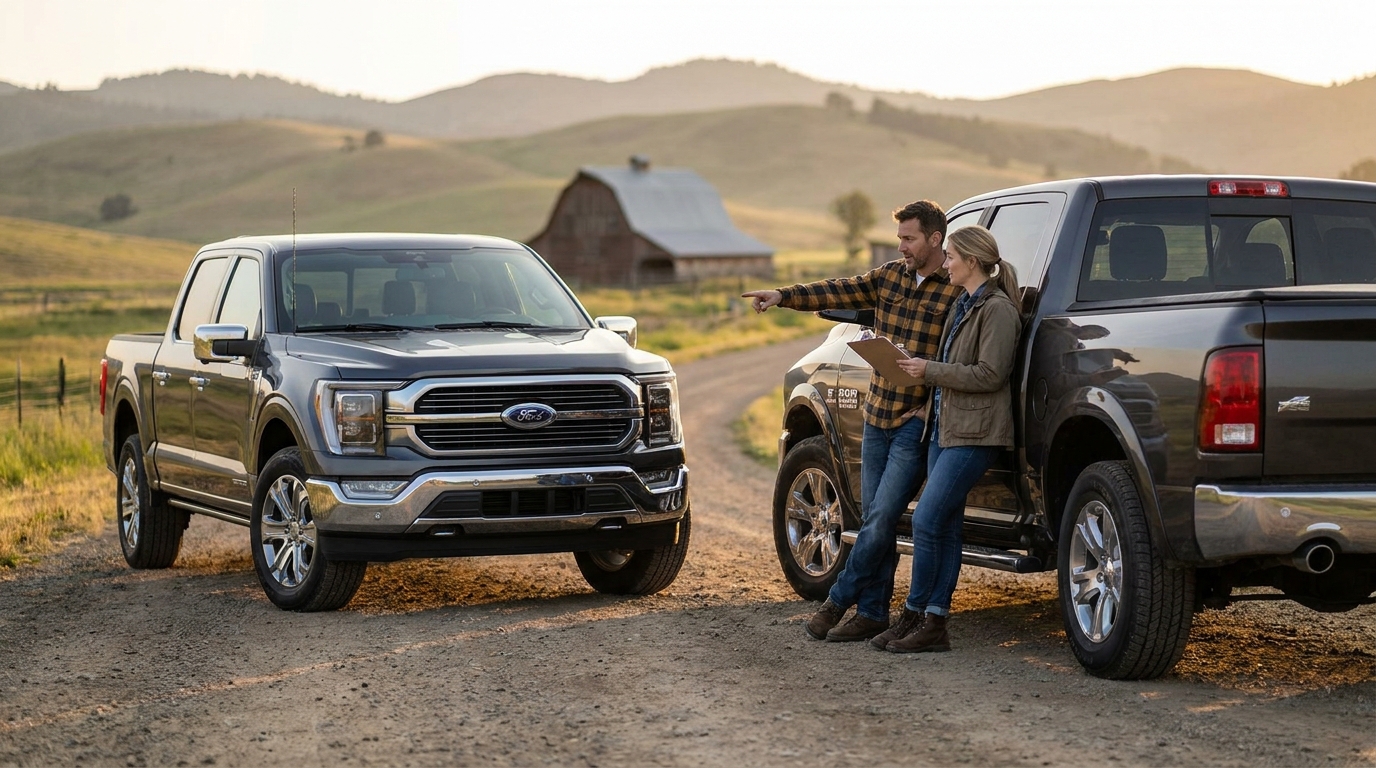
Buying a pickup is one of the bigger automotive decisions you'll make, and it's gotten more complicated in 2026. Truck lineups now span everything from compact crew cabs to heavy-duty diesels, with hybrid and electric options layered on top. The right truck for a contractor hauling materials between Lee's Summit and downtown Kansas City looks nothing like the right truck for a family that tows a boat to Lake Jacomo a few weekends a year.
This guide walks you through how to choose a pickup truck based on what you actually do with it — not what the commercials suggest you should do. We'll cover capability tiers, work truck versus personal truck tradeoffs, the features that matter most, and the local considerations that affect Lee's Summit buyers specifically.
Start With How You'll Actually Use the Truck
Before comparing trim levels or engine options, write down — honestly — what you need the truck to do in a typical month. Most buyers overestimate their towing and payload needs and underestimate how often they'll be driving an empty bed to work, school, or the grocery store.
Ask yourself these questions:
- Will you tow regularly, occasionally, or never? If you tow, what's the loaded weight of the trailer?
- Do you haul payload — gravel, mulch, tools, equipment — or mostly people?
- How many passengers ride along, and how often?
- What's your daily commute look like? Highway miles around I-470 and 50 Highway, or shorter trips around downtown Lee's Summit?
- Will the truck see job sites, gravel, and mud, or mostly paved roads and parking lots?
Your answers point you toward a capability tier. Light-duty trucks (think Ford F-150, Ram 1500, Chevy Silverado 1500) handle the vast majority of personal and light commercial use. Heavy-duty trucks (F-250/350, Ram 2500/3500, Silverado 2500/3500) are built for serious towing and payload — and they come with a meaningful penalty in ride quality, fuel economy, and price when you don't need that capability.
Work Truck vs Personal Truck: The Real Differences
The work truck vs personal truck question isn't just about trim level — it's about how the vehicle is configured and what tradeoffs you're willing to accept.
Work-Oriented Trucks
A true work truck prioritizes durability, payload, and serviceability over comfort and tech. You'll typically see vinyl floors instead of carpet, cloth or vinyl seats, regular cabs or extended cabs (more bed length, less rear-seat room), and 8-foot beds. The drivetrain is usually a base V6 or V8 tuned for low-end torque rather than peak horsepower.
If your truck is a tool — if it lives at job sites and gets cleaned with a hose — the work-spec configuration saves you money up front and holds up better to abuse. The infotainment is simpler, the seats clean easily, and there's less to break.
Personal-Use Trucks
Most pickups sold in Lee's Summit aren't work trucks. They're crew cabs with 5.5- or 6.5-foot beds, leather or premium cloth seats, advanced driver-assist features, and infotainment systems that match what you'd find in a luxury SUV. They're comfortable for daily driving, families fit easily in the back, and they handle weekend towing or hauling without complaint.
The tradeoff is price and bed utility. A loaded crew cab can run $65,000 or more in 2026, and a 5.5-foot bed limits what you can carry without accessories like a bed extender.
Truck Features Comparison: What Actually Matters
When you start comparing trucks, the spec sheets get overwhelming fast. Here's how we recommend prioritizing features:
Powertrain
Engine choice drives everything else. Turbocharged V6 engines now match or exceed the towing capacity of older V8s while delivering better fuel economy. Diesel options remain strong for heavy towing and long highway hauls. Hybrid pickups (the F-150 PowerBoost is the established example) offer onboard generator capability and meaningful fuel savings for buyers who put on a lot of miles. Fully electric trucks make sense for some buyers but require careful range planning if you tow.
Cab and Bed Configuration
Match the cab to your passenger needs and the bed to your cargo needs — not the other way around. A crew cab with a 5.5-foot bed is the most common configuration for a reason, but if you regularly haul 4x8 sheets of plywood or longer materials, the 6.5-foot bed is worth the extra length in your driveway.
4WD vs 2WD
In Lee's Summit, winters bring real ice and snow events, and 4WD or AWD makes a difference when storms roll through and the roads around Longview Lake or out toward Pleasant Hill haven't been cleared yet. Most local buyers go 4WD, and resale values reflect that preference.
Towing and Payload Ratings
Look at the specific configuration's tow rating, not the headline number. Maximum tow ratings usually require a specific engine, axle ratio, and tow package. If towing matters, verify the exact build before you commit.
Driver Assistance and Safety
Adaptive cruise, lane keep assist, blind-spot monitoring, and trailer-specific assist features (trailer backup assist, integrated trailer brake controllers) have moved from luxury extras to genuinely useful daily tools. We'd prioritize these over premium audio or appearance packages.
Budget: Look Beyond the Sticker
Truck total cost of ownership has three components beyond the purchase price: fuel, insurance, and depreciation. Heavy-duty diesels cost more to insure and fuel but often hold their value better. Loaded half-tons depreciate faster than work-spec configurations because there's a smaller used-market audience for $70,000 trucks than for $40,000 trucks.
Missouri-specific considerations: Missouri assesses personal property tax on vehicles annually, billed through Jackson County for Lee's Summit residents, so a more expensive truck means a higher annual tax bill for as long as you own it. Factor that into your total cost calculation.
New vs Used in the 2026 Market
Used truck prices have come down from their pandemic-era peaks, and the 2-to-4-year-old segment offers strong value in 2026. A lightly used crew cab with 30,000 miles often costs 25–30% less than the equivalent new build, with most of the warranty still intact on certified pre-owned options.
That said, new trucks come with current driver-assist tech, current infotainment, and full factory warranties — features that have advanced meaningfully in recent model years. If you plan to keep the truck 8–10 years, the new-vehicle premium amortizes well.
Frequently Asked Questions
How much truck do I really need?
If you tow under 7,000 pounds and haul reasonable payloads, a half-ton (1500-series) truck handles it comfortably. Step up to three-quarter-ton or one-ton only if you tow heavy trailers regularly, haul slide-in campers, or use the truck commercially. Oversizing the truck costs you in fuel, ride comfort, and maneuverability every day for capability you use occasionally.
Is a crew cab worth it if I rarely have rear passengers?
Resale value usually says yes. Crew cabs dominate the used market, so even if you don't need the back seat often, you'll recover more of your investment when it's time to trade. The exception is true work-truck buyers who'll get more value from the longer bed of a regular or extended cab.
Should I buy a hybrid or electric pickup?
Hybrids make sense for high-mileage drivers who want fuel savings without changing how they refuel. Electric pickups work well for buyers with home charging and predictable daily routes, but towing dramatically reduces range — plan accordingly if towing is a regular part of your use.
What about brands beyond the Big Three?
Toyota and Nissan offer competitive midsize and full-size pickups. The midsize segment (Tacoma, Frontier, Ranger, Colorado) has gotten genuinely capable and deserves a look from buyers who don't need full-size capability — they're easier to park, more efficient, and less expensive.
How do I know if my trade-in value is fair before I go to the dealership?
Check your current truck's value across two or three online valuation tools before any dealer visit. Condition, mileage, and local market demand all affect the number. In the Lee's Summit area, 4WD trucks consistently command stronger trade values than 2WD equivalents — a real advantage if you've owned one. Bring documentation of any recent service work; it supports a higher offer.
Is it better to buy a truck in a specific season to get a better deal?
End-of-calendar-year and end-of-model-year windows have historically produced stronger incentives on outgoing inventory, and that pattern holds in 2026. That said, the specific truck you want — right cab, bed, and powertrain — matters more than timing. A deal on the wrong configuration costs you more over time than waiting a few weeks for the right one.
Getting Help From People Who Know the Local Market
Choosing a pickup is easier when you can drive several configurations back-to-back and ask straightforward questions about how each one fits your situation. Lee's Summit buyers comparing pickups — whether trading a sedan for something more capable or replacing an older truck — can reach Volkswagen Lee's Summit at vwleessummit.com to talk through inventory, trade values, and what makes sense for the way you actually drive. The dealership's 4.5★ rating across more than 5,000 Google reviews reflects a customer experience built on transparency — one customer wrote that the process was "really transparent and straight," which are useful qualities when you're working through a decision this size.
"