Volkswagen vs Toyota: Reliability and Value Breakdown for 2026 Buyers
Compare Volkswagen and Toyota reliability, ownership costs, warranty, and driving dynamics in 2026 — a clear breakdown for Lee's Summit, MO buyers.

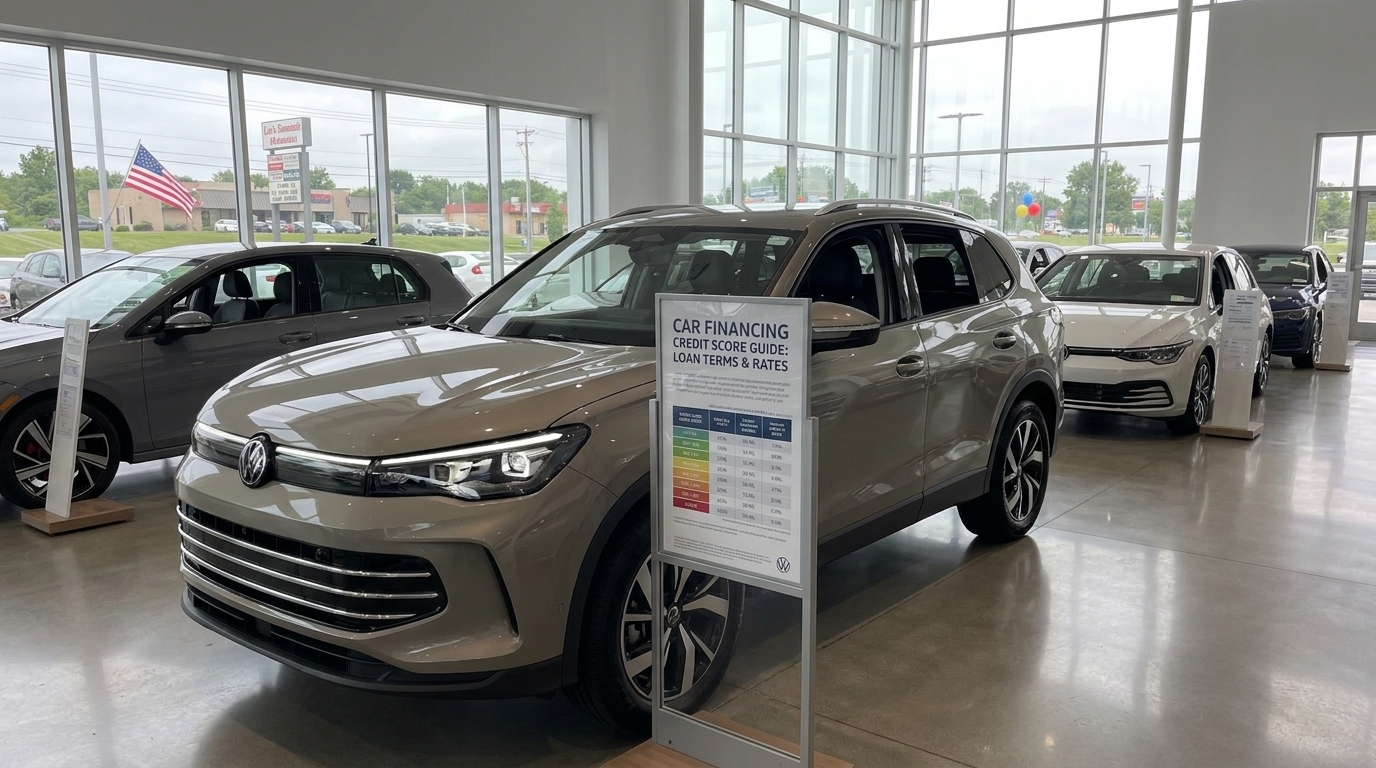
If you're cross-shopping a Volkswagen against a Toyota in 2026, you're likely weighing two very different philosophies of car ownership. One brand is built around long-haul dependability and resale value. The other is built around the way a car feels when you drive it. Both have loyal followings in the Kansas City metro — and both show up regularly on test drives at our showroom on the south side of Lee's Summit, just off the I-470 corridor.
So which one actually wins on reliability and value? The honest answer is more nuanced than the internet usually admits. Here's how the two brands stack up across the dimensions that matter most when you're spending your own money.
The Reliability Scoreboard: What the Data Actually Says
Toyota's reputation for reliability isn't marketing — it's measurable. The brand ranks 1st in Consumer Reports' Annual Auto Reliability Survey with a score of 66, and 4th of 30 brands in J.D. Power's Vehicle Dependability Study (3rd among mass-market brands). On RepairPal, Toyota carries a 4.0 out of 5.0 reliability score.
Volkswagen sits at 3.5 out of 5.0 on RepairPal, ranked 12th of 32 brands. Consumer Reports rates VW below average for new vehicles but mid-pack for used ones. So the gap is real, but it's not the chasm some forum threads suggest — VW is a mid-pack brand, not a bottom-feeder.
And the brand-wide score hides important model-level detail. The Tiguan posts a J.D. Power quality score of 81/100, with the Taos at 80 and Jetta at 79. Those are competitive numbers in their respective segments. The Atlas trails at 70, which is worth knowing if you're shopping three-row SUVs.
VW Reliability Ratings in Context: German vs Japanese Engineering
The German-versus-Japanese car reliability debate usually gets framed as black and white, but the engineering differences explain a lot. Volkswagen's TSI turbocharged engines — the 1.5L and 2.0L four-cylinders that power most of the current lineup — are tuned for responsiveness and torque delivery. The 2.0T produces 230 to 270 horsepower in the SUV lineup and 240+ in the GTI, with European-style chassis tuning to match.
That complexity rewards owners who follow the maintenance schedule and use the correct fluids. Skip an oil change on a turbocharged VW and you'll feel it sooner than you would in a naturally aspirated Toyota. This is why ownership behavior matters more with VW than with most brands, and why working with a service department that knows the platform — like ours here in Lee's Summit — tends to correlate with better long-term outcomes.
Toyota's approach is the opposite: prioritize proven powertrains, expand the hybrid lineup, and let dependability speak for itself. Many Toyota owners document reaching 200,000 to 250,000+ miles with proper maintenance. That's a genuine advantage if you keep cars a decade or longer.
Volkswagen Maintenance Costs vs Toyota: The Real Numbers
This is where the trade-off shows up in dollars. According to RepairPal, Volkswagen's average annual repair cost runs around $676 — slightly above the industry average. Toyota's lands between $441 and $489, comfortably below it.
Stretch that out over five years and the gap widens. CarEdge estimates the five-year ownership cost at $44,693 for Volkswagen and $32,449 for Toyota — a difference of roughly $12,244. That covers depreciation, insurance, maintenance, repairs, fuel, and fees.
Two important caveats. First, those are brand-wide averages; your specific model, trim, and driving habits will move the number. Second, VW's complimentary Carefree Coverage maintenance program covers your first 2 years or 24,000 miles of scheduled service, which offsets a meaningful chunk of early ownership cost.
Warranty Coverage: Where Volkswagen Pulls Ahead
Volkswagen's new-vehicle warranty actually beats Toyota's on the bumper-to-bumper term: 4 years/50,000 miles versus Toyota's 3 years/36,000 miles. VW also includes 3 years/36,000 miles of roadside assistance.
Toyota counters with a longer powertrain warranty (5 years/60,000 miles) and 5 years/unlimited miles of rust-through coverage — useful in Missouri, where road salt is a fact of winter life from roughly November through March. ToyotaCare covers 2 years/25,000 miles of scheduled maintenance and 2 years/unlimited miles of roadside assistance.
If your priority is comprehensive front-end coverage, VW's longer bumper-to-bumper term is a real advantage. If you keep cars past the 60,000-mile mark, Toyota's powertrain protection has the longer runway.
Pricing and Value: Where Your Dollar Lands
Volkswagen's gas lineup starts at $23,995 for the Jetta S and climbs to roughly $57,655 for a top-trim ID.4 electric. The Tiguan opens around $30,805, the Atlas around $39,310. Those figures exclude destination and delivery, which add to the out-the-door price.
Toyota tends to start lower on directly comparable models, and resale value is where Toyota historically separates itself. The 2026 Camry posts a J.D. Power resale score of 92/100; the 2026 Corolla scores 88/100. That's money back in your pocket at trade-in time three to five years from now.
Volkswagen's value pitch is different. You're getting a more European-feeling interior, sharper handling, and equipment levels that often punch above the price tag. Drive a Jetta SEL or a Tiguan SE R-Line back-to-back with a comparably priced competitor and the difference in cabin material quality is usually obvious.
Driving Dynamics: The Reason People Choose VW Anyway
Reliability and ownership cost aren't the only metrics that matter. Volkswagen consistently earns recognition for sporty, European-tuned handling and a premium interior feel, particularly in performance models like the Golf GTI and Golf R. Toyota prioritizes comfort, a calm ride, and class-leading hybrid efficiency through the Prius, RAV4 Hybrid, and Camry Hybrid.
For commuters driving 470 or 50 Highway into Kansas City every day, that distinction is real. A Tiguan or GTI makes the drive engaging. A RAV4 or Camry makes it efficient and uneventful. Neither answer is wrong — it depends on what you want out of the time you spend behind the wheel.
Which Brand Fits Which Buyer?
Choose Toyota if your top priorities are long-term dependability, low maintenance costs, strong resale value, and hybrid efficiency. Families planning to keep a vehicle for 10+ years and high-mileage commuters tend to land here.
Choose Volkswagen if you value driving feel, interior refinement, and European character, and you're willing to commit to consistent maintenance to keep the car running its best. GTI and Golf R shoppers in particular don't have a meaningful Toyota equivalent — the driving experience is the product.
Frequently Asked Questions
Is Volkswagen really less reliable than Toyota in 2026?
Statistically, yes — Toyota leads on every major reliability index including Consumer Reports, J.D. Power VDS, and RepairPal. But VW is mid-pack rather than poor, and individual models like the Tiguan and Taos score competitively on quality metrics.
Are Volkswagen maintenance costs really that much higher?
RepairPal puts VW's average annual repair cost at about $676 versus $441–$489 for Toyota. The gap is real, but it's partly offset by VW's 2-year/24,000-mile complimentary scheduled maintenance during the early ownership period.
Do Volkswagens last as long as Toyotas?
Toyotas are widely documented reaching 200,000–250,000+ miles with proper maintenance. Volkswagens can match that longevity, but they're less forgiving of skipped service intervals or non-spec fluids. The platform knowledge of your service shop matters more with VW.
Which holds its value better?
Toyota generally has the edge on resale. The 2026 Camry and Corolla post J.D. Power resale scores of 92 and 88 respectively, which is exceptional for the mass market.
The Bottom Line
Toyota wins the reliability and total-cost argument on paper, and that's not in dispute. Volkswagen wins on driving experience, interior quality, and warranty length, and the gap on reliability is narrower than reputation suggests — especially on stronger models like the Tiguan, Taos, and Jetta.
If you're weighing a VW for your next vehicle and want to drive one before deciding, the team at Volkswagen Lee's Summit can walk you through the current lineup, explain how Carefree Coverage maintenance works, and let you compare models back-to-back. Visit https://www.vwleessummit.com or stop by the showroom when it fits your schedule.