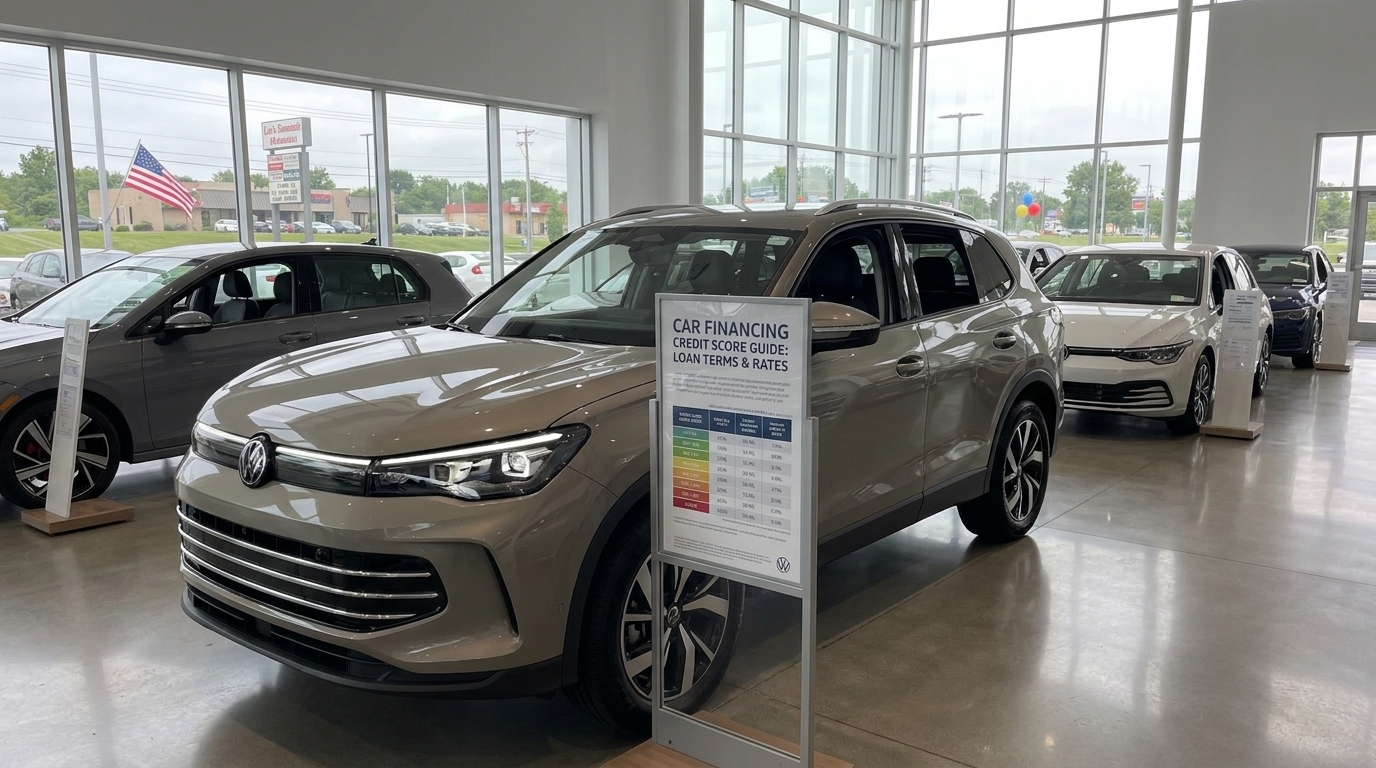
When to Lease vs Buy Your Volkswagen: Financial Decision Guide
A practical Volkswagen lease vs buy comparison for Lee's Summit drivers — when leasing wins, when buying makes sense, and how to decide in 2026.
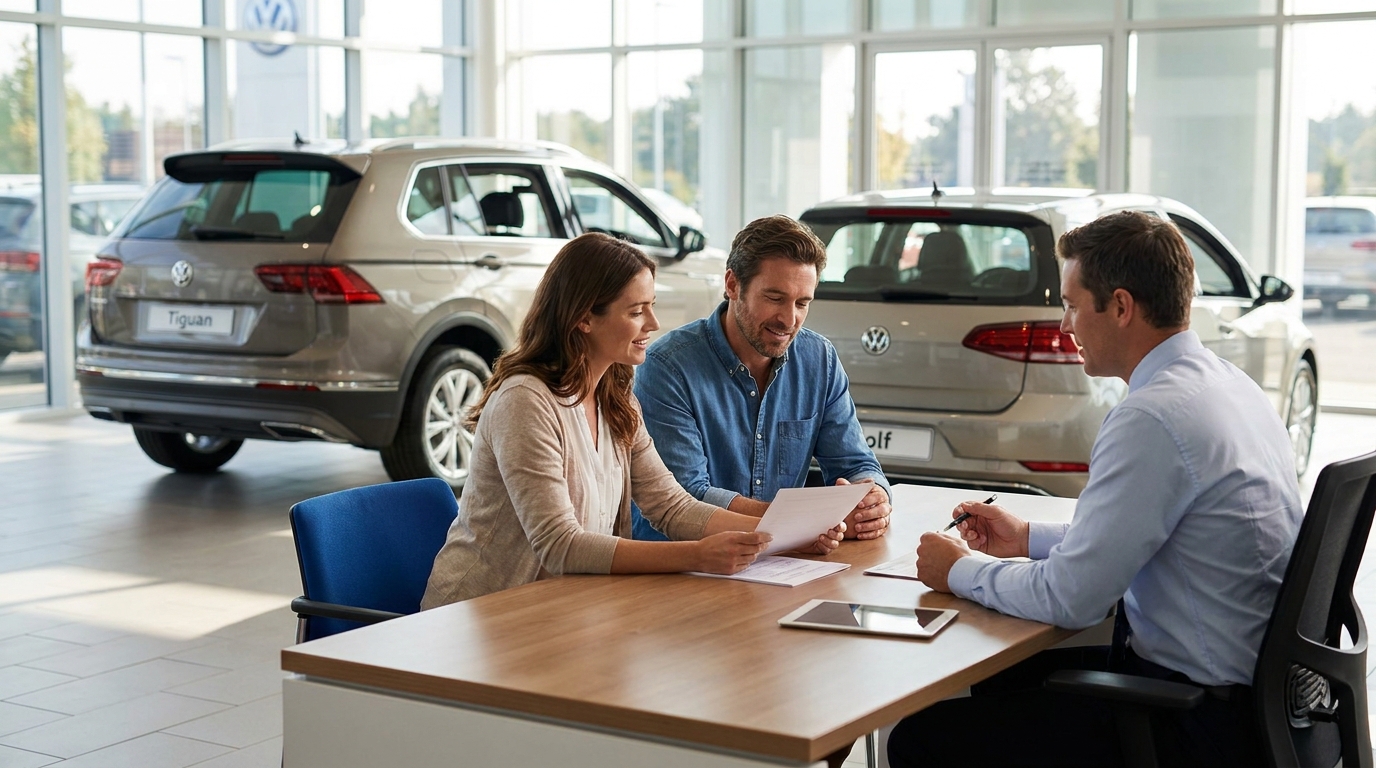
You're standing on the showroom floor looking at a new Jetta or Atlas, and the question hits: should you lease it or buy it? It's one of the most common questions we hear from drivers across Lee's Summit, and the honest answer is that it depends on how you drive, how long you keep cars, and what you want your monthly budget to look like.
This guide walks through the real financial tradeoffs of a Volkswagen lease vs buy comparison in 2026 — without the jargon, and with the Missouri-specific details that actually affect your wallet.
The Core Difference: What You're Actually Paying For
When you buy a Volkswagen, you're paying for the entire vehicle. When you lease, you're only paying for the portion of the vehicle's value you use during the lease term — typically 24, 36, or 39 months.
That's why lease payments are almost always lower than loan payments on the same car. You're financing depreciation, not the whole asset.
Buying builds equity. Leasing buys flexibility. Neither is universally smarter — the right choice depends on which of those two things you need more.
When Leasing Your Volkswagen Makes Sense
Leasing tends to be the stronger move in a few specific situations.
You like driving a newer car every few years
If the idea of being in a new Tiguan, Taos, or ID.4 every three years sounds good, leasing aligns with that rhythm naturally. You hand the keys back, you pick the next one, and you skip the hassle of selling or trading.
You want lower monthly payments
For the same Volkswagen at the same MSRP, the lease payment will typically be meaningfully lower than the loan payment. That matters if you're balancing a mortgage, kids in the Lee's Summit R-7 school district, and everything else Missouri family budgets juggle.
You're eyeing the ID.4 or another EV
This is one of the strongest cases for leasing right now. EV technology — battery chemistry, range, charging speed — is moving fast. Leasing an ID.4 lets you drive an electric Volkswagen for three years and then reassess the market without being locked into a specific generation of battery tech.
Leasing an EV can also be a cleaner path to capturing available federal incentives, because the structure often passes incentive value through as a capitalized cost reduction. The specifics depend on current federal guidance and the lease structure, so confirm the details on the specific vehicle you're considering.
You drive predictable, moderate miles
Most Volkswagen lease deals are structured around 10,000, 12,000, or 15,000 miles per year. If your commute from Lee's Summit to downtown Kansas City or out to the Summit Fair area fits comfortably inside those allowances, leasing works cleanly. Go significantly over, and per-mile overage charges erode the value.
When Buying Your Volkswagen Makes Sense
Buying — whether with cash or a loan — wins in other scenarios.
You keep cars for a long time
If your pattern is to drive a vehicle for seven, ten, or twelve years, buying almost always wins financially. Volkswagens are built to last well past a loan payoff, and the years you drive payment-free after the loan ends are where the real savings sit.
You drive a lot of miles
Long commutes, frequent trips to St. Louis or Springfield, towing with an Atlas — high-mileage drivers should generally buy. There's no mileage ceiling on a vehicle you own.
You want to modify or customize
Lease contracts require you to return the vehicle in roughly stock condition. If you want a lift, aftermarket wheels, a tune, or anything beyond minor accessories, ownership is the only path.
You value long-term equity
Once the loan is paid, the car is an asset. You can sell it, trade it, hand it down to a teen driver, or keep driving it payment-free. Leasing never builds that equity — at lease end, you walk away with nothing unless you choose to buy out the residual.
The Missouri-Specific Tax Detail That Matters
Missouri sales tax treatment is a meaningful piece of the lease vs buy math, and it works differently than many states.
When you buy a vehicle in Missouri and trade in another vehicle, sales tax is calculated on the difference between the purchase price and your trade-in value — a real tax savings if you're trading. When you lease, sales tax is typically applied to each monthly payment rather than the full vehicle price upfront, which changes how the cost flows but not necessarily the total.
Missouri also has a 180-day window after a sale to title and register a vehicle, and personal property tax assessments through Jackson County apply to vehicles you own as of January 1. Leased vehicles are usually billed through the leasing company, with the cost often passed through to you. None of these change the lease vs buy answer on their own, but they're worth understanding before you sign.
Volkswagen Financing Options at a Glance
- Standard finance loan: Traditional purchase, 36–72 month terms, you own the car at payoff.
- Lease: 24–39 months typically, lower payments, return or buy at end.
- Lease with purchase option: Lease now, exercise the residual buyout at the end if you've fallen in love with the car.
- Certified Pre-Owned financing: Often a strong middle ground — lower price than new, warranty coverage, competitive rates.
How to Decide: A Simple Framework
Ask yourself three questions:
- How long will I realistically keep this car? Under four years favors leasing. Over six years favors buying.
- How many miles will I drive annually? Under 15,000 is lease-friendly. Over that, lean toward buying.
- Do I want flexibility or equity? Flexibility points to leasing. Equity points to buying.
If two out of three answers point the same direction, that's usually your answer.
FAQs
Are VW lease deals better on certain models?
Lease offers vary by model and month, and they're often most aggressive on vehicles Volkswagen wants to move volume on. The Jetta, Tiguan, and ID.4 frequently carry competitive lease programs. Always ask about current incentives on the specific trim you want.
Can I end a Volkswagen lease early?
Yes, but it usually costs money. Early termination fees, remaining payments, and disposition charges add up. Lease transfers to another qualified driver are sometimes possible and can be a cleaner exit.
What happens at the end of a VW lease?
You have three main choices: return the vehicle and walk away, return it and lease or buy a different Volkswagen, or purchase the leased vehicle at the predetermined residual value.
Is a Certified Pre-Owned VW a smarter buy than new?
For many buyers, yes. You skip the steepest depreciation year, the vehicle still carries factory-backed CPO warranty coverage, and the monthly payment can be substantially lower.
The Bottom Line
There's no universally correct answer to lease vs buy — there's only the answer that fits your driving patterns, your budget, and how you think about cars. Short-term flexibility and lower payments point to a lease. Long-term ownership and high miles point to buying.
Drivers in Lee's Summit who want to walk through the numbers on a specific Volkswagen — with current lease programs, finance rates, and trade-in values factored in — can reach the team at Volkswagen Lee's Summit through vwleessummit.com. The dealership's 4.5-star rating across more than 5,000 Google reviews reflects a transparent, no-pressure approach that customers consistently describe as straightforward — exactly the environment a decision like this deserves.